
Introduction
Games are older than writing itself. The oldest game ever recorded tells us so much about early human life. Moreover, it proves that people have always loved to play.
Games Have Always Been Part of Human Life
People have played games for as long as we can trace. Long before books or schools existed, ancient people gathered around boards and pieces to compete. Surprisingly, the pastimes they enjoyed looked a lot like what we know today.
In fact, researchers believe the earliest activities served many purposes. They helped people practice strategy and build social bonds. Furthermore, some had deep spiritual meaning in early cultures around the world.
According to historians, play is a basic human need. Therefore, it makes sense that recreational activities appear so early in our story. The oldest game ever found is powerful proof of this truth.
The Royal Game of Ur: One of the Oldest Games Ever Found
The Royal Game of Ur is widely considered one of the oldest known games in human history. It dates back to around 2600 BCE in ancient Mesopotamia. As a result, this pastime is over 4,600 years old.
British archaeologist Sir Leonard Woolley discovered it in the 1920s. He found it buried in the royal tombs of Ur, in modern-day Iraq. Interestingly, the board was found in nearly perfect condition.
The board consists of 20 squares arranged in a specific pattern. Additionally, players used pyramid-shaped dice made from shell or bone. Two players competed to move their pieces across the board and off the other side first.
For more on this discovery, visit the British Museum’s official page on the Royal Game of Ur.
Senet: Another Ancient Game With Deep Roots
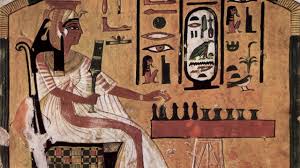
Senet is another activity that ranks among the oldest known in human history. It comes from ancient Egypt and dates back to around 3100 BCE. Therefore, it may actually be older than the Royal Game of Ur.
Ancient Egyptians played Senet for fun but also for religious reasons. Many believed the outcome could predict the future. Consequently, boards were often buried with the dead to guide them in the afterlife.
Each board has 30 squares arranged in three rows of ten. Players moved pieces based on the throw of flat sticks or knucklebones. Notably, Senet pieces were found in the tomb of King Tutankhamun himself.
You can read more about Senet at the Metropolitan Museum of Art.
Why the Game of Mancala Also Deserves Attention
Mancala is one of the oldest recreational traditions in the world. Some historians trace it back over 7,000 years in Africa. Consequently, it may actually be the oldest game ever played by human beings.
Players move seeds or stones around a carved board in this ancient activity. Early boards were simple holes dug into the ground or carved into rock. Amazingly, some of these original boards still exist in parts of Africa and the Middle East.
Unlike many ancient pastimes, Mancala is still widely enjoyed today. It remains popular across Africa, the Caribbean, and parts of Asia. Therefore, it represents the most continuous game tradition in recorded human history.
For more details, check out the African Games Archive.
Game Pieces Found Across the Ancient World
Archaeologists have uncovered game pieces in many ancient cultures. In Turkey, at a site called Catalhoyuk, such pieces date back to around 6000 BCE. Similarly, ancient boards have been found in Iran and India.
These discoveries show one clear truth. Every major ancient civilization participated in some kind of organized play. Additionally, many of these early activities had similar rules and layouts, even across very different cultures.
This parallel development is fascinating to scholars. It suggests that the human need to compete and play is universal. Moreover, ancient trade routes may have helped spread ideas from one region to another over time.
What Ancient Games Tell Us About Early Civilizations
Ancient pastimes give us a window into the past. They reveal how people thought, competed, and interacted with one another. Furthermore, they show us what early cultures valued in their leisure time.
For example, many ancient boards were crafted from expensive materials. Gold, ivory, and precious stones were often used in their construction. Therefore, these activities were clearly signs of wealth and social status in those early societies.
In addition, some were connected to religious rituals. Players believed that outcomes could reveal divine messages. Interestingly, this made the activity more than just entertainment for the people involved.
Because these activities were so important, they were often depicted in art. Ancient carvings and paintings show people playing in Egypt, Greece, and Rome. Consequently, these images help researchers understand exactly how early people lived and competed.
The Game of Go: An Ancient Strategy Game Still Alive Today
Go is one of the oldest strategy games still played competitively today. It originated in China over 2,500 years ago. Furthermore, it remains one of the most complex strategic activities ever invented by human beings.
Players use black and white stones placed on a large grid board. Each person tries to control more territory than their opponent. As a result, a single session can last for hours and requires incredibly deep thinking.
Go spread from China to Korea and Japan over many centuries. Today, it has millions of active enthusiasts around the world. Additionally, it is now being used to push the boundaries of artificial intelligence research.
Learn more about Go’s ancient origins at the American Go Association website.
Chess: A Game That Changed the World
Chess is perhaps the most well-known ancient game in the world today. It likely originated in India around the 6th century CE. From there, it spread westward through Persia and eventually into Europe.
The original Indian version was called Chaturanga. It already included pieces representing an army, including infantry, cavalry, and elephants. Interestingly, many of these pieces evolved into the familiar chess figures we recognize today.
By the time chess reached Europe, it had changed significantly. New rules were introduced, and the queen became the most powerful piece on the board. Consequently, chess became a symbol of intellect and royal power throughout medieval Europe.
The Game Continues Into Modern Times
It is remarkable that traditions from thousands of years ago still influence us today. Many modern board activities borrow rules from ancient versions. Similarly, video games share the same core concepts of challenge, skill, and reward that early players enjoyed.
Furthermore, the psychological pull of competition has never changed. People still love strategy, challenge, and the joy of winning something they worked hard for. Therefore, the oldest traditions are not so different from the newest ones we create today.
Researchers continue to study ancient play for clues about human behavior. Each discovery adds more detail to our understanding of history. Moreover, these findings remind us that the desire to play has always been deeply and profoundly human.
According to the National Geographic Society, these ancient activities shaped early social structures in surprising ways. They helped people learn cooperation and conflict resolution. As a result, organized play may have played a real role in building the first human communities together.
How the Oldest Games Have Survived
Many ancient boards and pieces survived because they were buried with the dead. Egyptians, for example, placed play sets inside tombs as meaningful offerings. Therefore, the dry desert climate preserved these objects for thousands of years without decay.
In other cases, traditions survived through continuous practice. Mancala, for example, was passed down through generations without interruption across millennia. Consequently, its rules remained mostly unchanged over thousands of years of continuous enjoyment.
Written records also helped preserve these traditions for future generations. Ancient texts from India, China, and Greece describe rules in careful detail. Thanks to these records, historians can reconstruct activities that otherwise might have been completely lost to time.
Ancient Games Around the World: A Brief Overview
The oldest play traditions span every continent on earth. Below is a brief look at where key ancient activities were found and when:
- Mancala (Africa): possibly over 7,000 years old
- Senet (Egypt): around 3100 BCE
- Royal Game of Ur (Mesopotamia): around 2600 BCE
- Go (China): over 2,500 years old
- Chaturanga/Chess (India): around 600 CE
Each tradition reflects the culture and values of the people who created it. Similarly, each spread and transformed as it traveled across regions and generations of human civilization over time.
The Human Need to Play is Ancient and Unbreakable
At the heart of every game is a basic human desire. People want to engage, compete, and connect with one another. Accordingly, this desire has driven the creation of recreational activities for thousands of years across every culture.
The oldest game ever played was more than just a pastime. It was a way to teach skills, build relationships, and make sense of the world. Furthermore, it was a form of cultural expression that brought communities closer together over time.
Today, billions of people around the world play every single day. From simple card activities to massive online virtual worlds, the tradition continues strong. Undeniably, structured play remains one of the most powerful forces in all of human culture and society.
Closing Thoughts on the Oldest Game in History
The story of the oldest game is really the story of humanity itself. Every culture has played, and every era has left its version behind for others to find. Fortunately, many of these versions have survived long enough for us to study and enjoy today.
As new archaeological sites are uncovered, even older activities may be found. The search is ongoing, and each new discovery reshapes what we thought we knew. In the end, the history of the game is still being written with every new dig and every new find.
The next time you sit down to play something, remember this rich and ancient history. You are part of a tradition that stretches back thousands and thousands of years. Above all, you are doing something deeply, wonderfully, and unmistakably human.
Sources and Further Reading
- British Museum – Royal Game of Ur: https://www.britishmuseum.org/collection/object/W_1928-1009-378
- Metropolitan Museum of Art – Senet: https://www.metmuseum.org/toah/hd/senet/hd_senet.htm
- American Go Association – History of Go: https://www.usgo.org/about-go
- National Geographic – Ancient Pastimes and Social Structures: https://www.nationalgeographic.com/history/article/ancient-games