
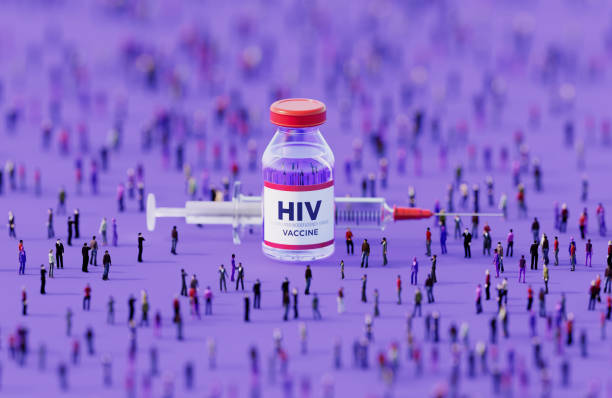
HIV/AIDS cure research is one of the most exciting frontiers in modern medicine. Scientists are closer than ever before, and the progress is real. Here is everything you need to know, explained in plain, simple language.
HIV/AIDS Cure: Why the World Needs One So Badly
Let us be honest for a second. Telling someone they need to take medication every single day for the rest of their life is not a cure. It is management. And while antiretroviral therapy (ART) has genuinely saved millions of lives, the global search for a real HIV/AIDS cure continues to grow louder.
Today, roughly 39 to 40 million people around the world are living with HIV. That number alone tells you this is not a small problem. Furthermore, not everyone has equal access to treatment. In many parts of Africa, Asia, and Latin America, daily medication is either unavailable or unaffordable for large portions of the population.
Therefore, finding a proper HIV/AIDS cure is not just a scientific goal. It is a matter of global justice.
Understanding HIV: The Biology Behind the Problem
Before you can appreciate the HIV/AIDS cure challenge, you first need to understand what HIV actually does inside your body. The virus is sneaky. In fact, it is one of the most cleverly designed pathogens scientists have ever studied.
How HIV Enters Your Body
HIV stands for Human Immunodeficiency Virus. It primarily targets a specific type of white blood cell called CD4+ T cells, also known as T-helper cells. These cells play a central role in coordinating your immune response. Think of them as the generals of your immune army.
The virus enters the CD4+ cell by latching onto two proteins on the cell’s surface. One is the CD4 receptor, and the other is usually a co-receptor called CCR5 (or sometimes CXCR4). Without these entry points, the virus cannot get inside.
Interestingly, a rare genetic mutation called CCR5-delta32 causes some people to naturally lack functional CCR5 receptors. As a result, these individuals are largely resistant to HIV infection. This discovery became a crucial clue in the HIV/AIDS cure journey, as you will see later.
What HIV Does Once Inside
Once HIV gets into a CD4+ cell, it releases its genetic material, which is made of RNA. An enzyme called reverse transcriptase then converts that RNA into DNA. Another enzyme called integrase helps the viral DNA merge directly into the host cell’s own DNA.
This is where the real problem begins. Because the virus is now part of the cell’s genetic code, your immune system cannot detect or destroy it. The cell just looks like a normal cell. This hidden state is called latency, and it is the number one reason a permanent HIV/AIDS cure has been so difficult to achieve.
When treatment stops, those sleeping infected cells can wake up and start producing new virus particles again. Consequently, the infection comes roaring back.
The Latent Reservoir Problem
Scientists call these dormant infected cells the “latent reservoir.” They sit quietly in various tissues, including lymph nodes, the gut, and the brain. Even decades of antiretroviral therapy cannot flush them out. This reservoir is the biggest scientific barrier to a permanent HIV/AIDS cure today.
ART Is Great, But It Is Not a Cure
Antiretroviral therapy works by blocking different stages of HIV’s life cycle. Some drugs stop the virus from entering cells. Others block reverse transcriptase or integrase. When used in combination, they suppress HIV to undetectable levels in the blood.
This is where the concept of U=U comes in. U=U stands for Undetectable equals Untransmittable. When someone’s viral load is fully suppressed through ART, they cannot sexually transmit the virus to others. That is genuinely life-changing news. Learn more from the Prevention Access Campaign
However, ART does not eliminate HIV from the body. The moment treatment stops, the virus rebounds from those latent reservoirs. Additionally, lifelong daily medication comes with its own challenges, such as side effects, pill fatigue, stigma, and the simple reality of cost and access.
The Berlin Patient: The First Proof That an HIV/AIDS Cure Is Possible
In 2008, a man named Timothy Ray Brown made history. He was living with HIV and was also battling leukemia. His doctors decided to treat his cancer with a stem cell transplant from a very specific kind of donor: someone who carried two copies of the CCR5-delta32 mutation.
The result was extraordinary. Brown’s HIV was effectively eliminated. His cancer went into remission, and his body appeared free of the virus. He became known as the Berlin Patient, and his case was the first documented functional HIV/AIDS cure in history. Read the original case study
Since then, several more people have achieved similar outcomes, including the London Patient, the Düsseldorf Patient, and others. By mid-2026, roughly ten documented cases of apparent sterilizing cure have been recorded, mostly through stem cell transplants during cancer treatment.
These cases are enormously important because they prove that an HIV/AIDS cure is biologically possible. Nevertheless, stem cell transplants are dangerous, expensive, and require matched donors. They cannot be scaled up as a solution for 40 million people.
HIV/AIDS Cure Research: The Most Promising Approaches in 2025 and 2026
The good news is that scientists are working on several smart, scalable strategies. Accordingly, the field has never been more active or hopeful.
Broadly Neutralizing Antibodies (bNAbs)
Your immune system naturally produces antibodies to fight infections. However, most HIV antibodies are too narrow in their targeting. Broadly neutralizing antibodies, or bNAbs, are special. They can target many different strains of HIV at once.
Recent trials, including the RIO study and trials in South Africa, have shown that bNAbs can help suppress the virus even when people stop taking ART. In certain groups, roughly 30 to 50 percent of participants remained off standard treatment for several months to nearly a year. Source: napwha.org.au
Gilead Sciences has been combining their drug lenacapavir with bNAbs in clinical trials, showing encouraging results for long-acting HIV control. This combination approach could be a stepping stone toward a genuine HIV/AIDS cure strategy.
Gene Editing and CRISPR Technology
CRISPR is one of the hottest words in modern biology, and for good reason. This gene-editing tool allows scientists to cut, edit, or remove specific sequences of DNA with remarkable precision.
Excision BioTherapeutics has been testing a CRISPR-based therapy called EBT-101, which aims to cut HIV’s DNA directly out of infected cells. Although the therapy is still in clinical trials, early results are being watched closely across the scientific community. More from viivhealthcare.com
Additionally, researchers are engineering special immune cells to better resist HIV or to hunt down infected cells. CAR-T cell therapy, already used in cancer treatment, is also being explored as part of an HIV/AIDS cure strategy.
Long-Acting Injectables
One of the practical barriers to managing HIV is daily pill-taking. Twice-yearly injectable options, built around lenacapavir, are advancing rapidly. These long-acting formulations could transform both treatment and prevention (PrEP), making adherence dramatically easier for millions of people.
While injectables are not themselves an HIV/AIDS cure, they represent an important bridge. Moreover, they may be combined with other therapies in future cure strategies.
Shock and Kill Strategies
One approach researchers are exploring involves waking up latent HIV reservoirs on purpose. The idea is to force dormant infected cells to show themselves, then use the immune system or drugs to destroy them. This “shock and kill” strategy sounds straightforward. In practice, however, it has been difficult to execute without causing harmful immune activation.
Scientists at UCSF and other institutions are investigating combination immunotherapy approaches to make this more precise and effective. Source: ucsf.edu
The Block and Lock Approach
The opposite of shock and kill is sometimes called “block and lock.” Instead of waking the virus up, researchers try to permanently silence it. The goal is to lock HIV into a permanent dormant state, so it can never reactivate even if treatment stops.
If successful, block and lock could create a functional HIV/AIDS cure, even without physically removing the virus from the body.
The First HIV/AIDS Cure Trial in Africa
A landmark HIV cure trial conducted in South Africa marked an important moment. It was the first such trial on the African continent, and it yielded critical insights into how the immune system responds to these experimental approaches in a diverse population.
The results did not produce a complete HIV/AIDS cure, but they highlighted what needs to happen next. Importantly, the trial showed that inclusive research involving African populations is not optional. It is essential. Source: Gilead Sciences CROI 2025 updates
A woman in South Africa also became one of the documented cases of HIV remission without transplant, adding to evidence that the immune system itself may sometimes control or clear the virus under certain conditions.
The Science of the Immune System and HIV: A Deeper Look
Understanding how the immune system interacts with HIV helps explain why the HIV/AIDS cure puzzle is so complex.
CD4 Counts and Immune Damage
HIV’s primary target, the CD4+ T cell, is essential for coordinating the immune response. As HIV destroys these cells over time, the immune system grows weaker. When the CD4 count drops below 200 cells per cubic millimeter of blood, a person is diagnosed with AIDS (Acquired Immunodeficiency Syndrome).
At this stage, the body becomes vulnerable to opportunistic infections, things like tuberculosis, pneumonia, and certain cancers, that a healthy immune system would normally handle easily.
Why the Immune System Cannot Clear HIV on Its Own
In most viral infections, your immune system eventually wins. With the flu or chickenpox, your body mounts a response, clears the virus, and stores memory cells for future protection.
With HIV, however, the virus changes too fast. It mutates rapidly, escaping immune detection. Furthermore, it hides inside the very cells that are supposed to be fighting it. The immune system ends up exhausted and overwhelmed, unable to finish the job.
This is why external help, in the form of drugs, antibodies, or gene editing, is necessary for any HIV/AIDS cure to work.
Key Challenges Standing Between Us and an HIV/AIDS Cure
Despite all the progress, significant obstacles remain on the road to a widely accessible HIV/AIDS cure.
The Latent Reservoir Is Stubbornly Persistent
Even after years of ART bringing viral loads to undetectable levels, the latent reservoir survives. Scientists estimate it could take more than 70 years of perfect ART adherence to naturally eliminate the reservoir through cell death. Clearly, that is not a viable path forward.
Viral Diversity Makes Targeting Difficult
HIV mutates constantly. Different strains circulate in different regions of the world. A therapy that targets one strain may miss another. This genetic diversity complicates vaccine development and makes a universally effective HIV/AIDS cure harder to design.
Immune Exhaustion
Chronic HIV infection wears out the immune system over time. Even with ART, certain immune functions remain impaired. Restoring full immune function is an important part of achieving lasting control, but it adds another layer of complexity.
Funding and Global Equity
Recent cuts to global health aid have created real pressure on HIV research programs. Additionally, even when a treatment or HIV/AIDS cure strategy works in wealthy countries, ensuring access in low-income settings is a separate and equally critical challenge. Source: IAS Society
HIV/AIDS Cure Progress: A Timeline of Hope
It helps to look back and appreciate how far the field has come.
1981: AIDS is first clinically recognized in the United States.
1987: AZT, the first antiretroviral drug, receives approval.
1996: Combination ART (HAART) transforms HIV into a manageable condition.
2008: Timothy Ray Brown becomes the first person apparently cured of HIV.
2019: The London Patient achieves remission after stem cell transplant.
2022 to 2023: Additional cure cases documented, including City of Hope patient and New York patient.
2025 to 2026: bNAb combination trials, CRISPR therapies, and long-acting injectables advance significantly. First African HIV cure trial completed.
Each step forward proves that what once seemed impossible is becoming increasingly plausible.
HIV/AIDS Cure: What Experts Are Saying
Scientists and researchers are cautiously but genuinely optimistic. Most experts believe a functional HIV/AIDS cure, meaning long-term control without daily medication, could realistically emerge within the next ten to twenty years for many people.
A sterilizing cure, meaning complete elimination of the virus from the body, is viewed as more difficult but no longer considered impossible. The combination of gene editing, immunotherapy, and broadly neutralizing antibodies gives researchers multiple tools to work with simultaneously.
The key insight from recent years is this: no single approach will likely be enough. Instead, combination strategies, much like combination ART itself, will probably be needed to achieve a durable HIV/AIDS cure.
Prevention Is Still the Most Powerful Tool We Have
While the search for an HIV/AIDS cure continues, prevention remains critically important right now. Long-acting PrEP (pre-exposure prophylaxis), including twice-yearly lenacapavir injections, is showing remarkable effectiveness in clinical trials.
Getting tested regularly, accessing ART early, and using prevention tools reduces transmission dramatically. These steps also keep people healthier while the scientific community works toward an HIV/AIDS cure that can help everyone.
Closing Thoughts: The HIV/AIDS Cure Is Not a Fantasy
Thirty years ago, an HIV diagnosis felt like a death sentence. Today, people with HIV can live long, healthy, fulfilling lives. Ten years from now, the landscape may look completely different again.
The HIV/AIDS cure research community is larger, better-funded (though still underfunded), and more creative than at any point in history. Real people, such as the Berlin Patient and the London Patient, have already been cured. The biology says it is possible. The science is catching up.
So yes, the HIV/AIDS cure is coming. The only real question is how soon, and whether the world will ensure it reaches everyone who needs it.
Sources and Further Reading
- Gilead Sciences, CROI 2025 Trial Updates: https://www.gilead.com
- ViiV Healthcare, HIV Research and Resources: https://www.viivhealthcare.com
- IAS (International AIDS Society): https://iasociety.org
- UCSF HIV/AIDS Research: https://ucsf.edu
- IrsiCaixa AIDS Research Institute: https://www.irsicaixa.es
- NAPWHA (National Association of People with HIV Australia): https://napwha.org.au
- New England Journal of Medicine, Berlin Patient Case: https://www.nejm.org/doi/full/10.1056/NEJMoa0803963
- Prevention Access Campaign (U=U): https://www.preventionaccess.org
- WebMD HIV/AIDS Overview: https://www.webmd.com
- amfAR, The Foundation for AIDS Research: https://www.amfar.org