
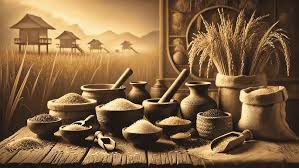
Rice feeds more than half of the world’s population today. Moreover, this ancient grain has shaped civilizations, transformed landscapes, and become deeply woven into cultural traditions across continents. Furthermore, understanding its remarkable journey reveals fascinating insights into human history and agricultural development.
Ancient Origins: The Birth of Cultivation
Archaeological evidence suggests that rice cultivation began approximately 9,000 years ago in the Yangtze River basin of China. Consequently, this domestication represented one of humanity’s most significant agricultural achievements. Scientists have traced rice consumption back to sites dating between 7000 and 5000 BCE in central and eastern China https://www.britannica.com/plant/rice. Additionally, African rice was independently domesticated around 3,000 years ago near the Niger River in West Africa, demonstrating parallel agricultural innovation across continents.
Ancient Chinese civilization recognized the profound importance of rice early in its history. Notably, Emperor Shen Nung established annual rice ceremonies around 2800 BCE, scattering the first seeds himself to honor this vital grain https://www.riceassociation.org.uk/history-of-rice. Therefore, rice quickly became more than sustenance; it evolved into a cultural symbol representing prosperity and life itself.
The domestication process itself took thousands of years. Meanwhile, hunter-gatherers gradually transitioned from collecting wild rice to actively cultivating it. Through selective breeding, early farmers developed varieties with larger grains, non-shattering seed heads, and improved yields. Subsequently, these agricultural innovations spread throughout Asia, transforming societies from nomadic to settled agricultural communities.
The Global Spread: Rice Conquers New Territories
From its Asian origins, rice embarked on a remarkable journey across continents. Initially, cultivation spread throughout East and Southeast Asia, reaching Korea and Japan by traveling northeast https://en.wikipedia.org/wiki/History_of_rice_cultivation. Furthermore, it moved southward into Indonesia and the Philippines, adapting to diverse tropical climates.
Trade routes and migration patterns carried rice westward into India, where evidence suggests cultivation in the Ganges River valley by the third millennium BCE. Similarly, rice reached the Middle East and Mediterranean regions through ancient trade networks. Spanish and Italian cuisines eventually incorporated rice, creating iconic dishes like paella and risotto that remain beloved today.
The journey to the Americas began during the late 17th century. Specifically, a British ship captain named James Thurber gifted rice seeds to colonists in Charleston, South Carolina around 1694 after seeking refuge there https://www.riceassociation.org.uk/history-of-rice. Consequently, rice cultivation flourished in the American South, particularly in South Carolina’s coastal lowlands. Unfortunately, this agricultural development became intertwined with slavery, as enslaved Africans brought expertise in rice cultivation from their homeland.
Today, rice grows in more than 100 countries worldwide. Nevertheless, Asia remains the dominant producer, accounting for over 90% of global production. China, India, Indonesia, and Bangladesh lead in both production and consumption, while countries like Thailand, Vietnam, Pakistan, and the United States serve as major exporters https://www.encyclopedia.com/food/encyclopedias-almanacs-transcripts-and-maps/natural-history-rice.
Varieties and Cultural Significance
With over 40,000 varieties, rice demonstrates remarkable diversity https://www.chhs.colostate.edu/krnc/monthly-blog/is-rice-good-for-you/. These varieties differ in grain length, color, aroma, and nutritional content. Primarily, rice falls into two major subspecies: indica and japonica. Indica varieties feature long, slender grains that remain fluffy when cooked, thriving in tropical climates. Conversely, japonica varieties have shorter grains and stickier texture, growing well in temperate regions.
Aromatic varieties like basmati and jasmine rice have achieved global popularity for their distinctive flavors and fragrances. Meanwhile, colored varieties including black, red, and purple rice offer unique nutritional profiles rich in anthocyanins and antioxidants. Additionally, specialty varieties like arborio rice have become essential for specific regional dishes.
Beyond nutrition, rice holds profound cultural and spiritual significance. In many Asian languages, the word for “eating” directly translates to “eating rice,” illustrating its central role in daily life. Moreover, numerous cultures associate rice with deities and spiritual beliefs. Indonesian culture worships Dewi Sri as the rice goddess, while Japanese tradition honors Inari as the rice god https://www.sunria.com/pages/rice-and-its-history.
Wedding traditions worldwide incorporate rice as a symbol of fertility and prosperity. Similarly, in Indian culture, brides traditionally offer rice to their husbands first to ensure fertility in marriage. These customs demonstrate how deeply rice has embedded itself into human celebration and ritual across diverse societies.
Nutritional Profile: Understanding the Basics
Rice provides essential nutrition to billions of people daily. Primarily composed of carbohydrates, rice serves as an excellent energy source. Additionally, it contains important minerals including magnesium, phosphorus, manganese, selenium, and iron https://pubmed.ncbi.nlm.nih.gov/31619630/. Rice also supplies B vitamins such as thiamin, niacin, and folic acid, particularly in enriched white varieties.
Brown rice retains its bran layer and germ, consequently offering superior nutritional value compared to white rice. Specifically, it provides significantly more fiber, supporting digestive health and promoting satiety. Furthermore, brown rice contains higher levels of vitamins, minerals, and beneficial antioxidants including flavonoids and phenolic compounds https://health.clevelandclinic.org/is-brown-rice-healthy.
White rice undergoes milling and polishing processes that remove the bran and germ layers. Therefore, while easier to cook and digest, white rice loses substantial nutrients during processing. However, many countries now fortify white rice with added B vitamins and iron to restore nutritional value. Consequently, enriched white rice provides important nutrients despite its refined nature.
Rice remains naturally gluten-free, making it valuable for people with celiac disease. Additionally, it contains virtually no fat or saturated fat, supporting heart-healthy eating patterns https://www.webmd.com/diet/health-benefits-rice. These characteristics explain why rice continues serving as a dietary staple worldwide.
Health Benefits: The Positive Impact
Research demonstrates numerous health benefits associated with regular rice consumption, particularly whole grain varieties. Significantly, studies show that whole grains like brown rice may reduce cardiovascular disease risk by improving blood cholesterol levels https://www.medicalnewstoday.com/articles/318699. The fiber content helps lower LDL cholesterol while promoting heart health through multiple mechanisms.
Brown rice contains compounds that support blood sugar management. Although white rice has a higher glycemic index of 64, brown rice scores only 55, causing slower, more gradual blood sugar increases https://www.webmd.com/diet/health-benefits-rice. Therefore, choosing brown rice over white may help reduce type 2 diabetes risk. Indeed, one study found brown rice consumption lowered diabetes risk by 16% compared to white rice intake.
The fiber in brown rice promotes digestive health by encouraging regular bowel movements. Moreover, it helps prevent hemorrhoids and improves overall bowel control. Fiber also creates feelings of fullness, potentially supporting healthy weight maintenance by reducing overall calorie intake https://www.medicalnewstoday.com/articles/318699.
Antioxidants present in rice, especially brown and colored varieties, combat oxidative stress and cellular damage. Specifically, brown rice contains phenolic compounds with anti-inflammatory properties. Similarly, black and red rice varieties contain anthocyanins, powerful antioxidants linked to reduced chronic disease risk https://health.clevelandclinic.org/is-brown-rice-healthy.
Research indicates that rice eaters often demonstrate better overall diet quality. Specifically, studies found that people consuming rice showed reduced risks for high blood pressure, increased waist circumference, and metabolic syndrome compared to non-rice eaters https://www.usarice.com/thinkrice/health-nutrition/rice-nutrition. These findings suggest rice can contribute positively to balanced, healthy eating patterns.
Health Concerns: Important Considerations
Despite its benefits, rice consumption presents certain health considerations requiring attention. Most significantly, arsenic contamination has emerged as a serious concern in recent years. Rice naturally absorbs arsenic from soil and irrigation water more readily than other crops due to its growing environment https://health.osu.edu/wellness/exercise-and-nutrition/how-to-reduce-arsenic-in-rice.
Studies have linked long-term arsenic exposure to various health problems including cancer, cardiovascular disease, diabetes, hypertension, and developmental delays in children https://pmc.ncbi.nlm.nih.gov/articles/PMC10375490/. Particularly concerning, brown rice typically contains higher arsenic levels than white rice because the bran layer absorbs and concentrates arsenic. Recent testing found that one in four store-bought rice samples exceeded FDA safety limits for inorganic arsenic https://www.cnn.com/2025/05/15/health/arsenic-cadmium-rice-wellness.
Fortunately, proper cooking methods can significantly reduce arsenic content. Specifically, soaking rice overnight before cooking and using extra water during cooking, then draining excess water, can reduce arsenic levels by up to 60% https://www.chhs.colostate.edu/krnc/monthly-blog/is-rice-good-for-you/. Additionally, varying grain types in your diet rather than relying exclusively on rice helps minimize exposure risks.
White rice consumption has been associated with increased diabetes risk in several large studies. Research involving 132,373 participants across 21 countries found that higher white rice intake correlated with elevated diabetes incidence https://pmc.ncbi.nlm.nih.gov/articles/PMC7576435/. Each additional serving of white rice increased diabetes risk by approximately 11%. Consequently, the high glycemic load of white rice may impair glucose homeostasis over time.
The diabetes connection appears particularly significant in populations consuming rice as their primary staple. For instance, scientists studying South Asian populations have warned that increased diabetes prevalence may relate directly to arsenic-contaminated rice consumption https://pmc.ncbi.nlm.nih.gov/articles/PMC5735331/. Therefore, balancing rice intake with other whole grains becomes especially important for diabetes prevention.
Making Healthier Choices
Given both benefits and risks, making informed choices about rice consumption becomes essential. Primarily, choosing brown rice over white provides superior nutritional value while still maintaining cultural and culinary traditions. Although brown rice contains more arsenic, its fiber, vitamins, and minerals offer substantial health advantages that may outweigh risks when consumed moderately.
Diversifying grain intake represents the optimal strategy for most people. Instead of relying solely on rice, incorporate other whole grains like quinoa, barley, oats, and millet into your diet. This approach reduces arsenic exposure while providing varied nutrients and preventing dietary monotony.
Parents should exercise particular caution with rice-based infant products. Rice cereals, rice milk, and rice crackers commonly given to babies may contain concerning arsenic levels. Therefore, nutritionists now recommend offering multi-grain or oatmeal-based cereals instead of rice cereal as babies’ first solid foods https://health.osu.edu/wellness/exercise-and-nutrition/how-to-reduce-arsenic-in-rice.
When consuming rice, portion control matters significantly. Limiting servings to moderate amounts and avoiding daily consumption helps manage both arsenic exposure and diabetes risk. Additionally, combining rice with protein, healthy fats, and fiber-rich vegetables creates more balanced meals that moderate blood sugar responses.
Selecting rice varieties carefully also makes a difference. Some newer high-fiber white rice varieties offer improved nutritional profiles with lower glycemic responses than traditional polished white rice https://pmc.ncbi.nlm.nih.gov/articles/PMC7576435/. Furthermore, certain regions produce rice with naturally lower arsenic levels, though testing and labeling remain inconsistent.
Looking Forward
Rice will undoubtedly remain a global staple as population continues growing. However, addressing arsenic contamination and improving nutritional quality represent critical challenges requiring collaborative solutions. Farmers, scientists, healthcare providers, and policymakers must work together ensuring sustainable, safe rice production systems.
Agricultural innovations show promise for reducing arsenic uptake. Research indicates certain microorganisms and farming practices can minimize arsenic absorption by rice plants https://pmc.ncbi.nlm.nih.gov/articles/PMC5735331/. Meanwhile, developing rice varieties with enhanced nutritional profiles and lower arsenic accumulation could transform global rice consumption patterns.
Consumer awareness and education remain equally important. Understanding both the profound cultural significance and health implications of rice empowers people to make informed dietary choices. Ultimately, rice represents humanity’s remarkable agricultural achievement while reminding us that even our most fundamental foods require thoughtful, balanced consumption.
Sources:
https://www.britannica.com/plant/rice
https://en.wikipedia.org/wiki/History_of_rice_cultivation
https://www.riceassociation.org.uk/history-of-rice
https://www.encyclopedia.com/food/encyclopedias-almanacs-transcripts-and-maps/natural-history-rice