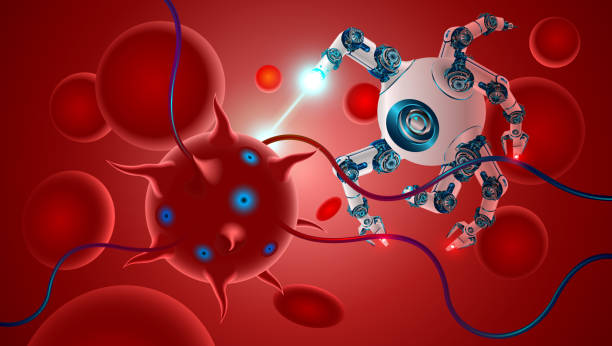
Nanobots are here, and they are tinier than anything you can imagine. These microscopic machines are moving from science fiction into real hospitals and labs. Scientists are already using nanobots to fight cancer, repair cells, and deliver drugs with stunning precision.
Nanobots 101: What Exactly Are These Tiny Things?
Picture a robot so small it can swim through your blood vessels. That is exactly what nanobots do. These tiny machines operate at the nanoscale, which means they are between 1 and 100 nanometers in size. To put that into perspective, a human hair is about 80,000 nanometers wide.
So yes, we are talking about robots that are absolutely, ridiculously tiny.
Nanobots are built from materials like DNA, metals, polymers, and biohybrid components. Unlike regular nanoparticles that just float around passively, true nanobots are designed to move with purpose. They can propel themselves using chemical reactions, magnetic fields, light, or even biological motors. Furthermore, they can navigate complex biological environments like blood vessels, tissues, and even tumors.
Scientists draw inspiration for nanobots from nature itself. Motor proteins inside your own body already act like tiny machines. They carry cargo along cell highways and perform precise molecular tasks. Nanobots are engineered to do something similar, but with specific medical goals in mind.
Learn more about the foundational science at ACS Publications.
The Human Body: A Complex Battlefield Nanobots Must Navigate
Before understanding what nanobots can do, it helps to understand the battlefield they work in. The human body is extraordinarily complex. It contains about 37 trillion cells. Each cell is a busy factory with its own machinery, and the spaces between cells are filled with fluids, proteins, and signals.
The bloodstream is like a superhighway system. Blood travels through roughly 100,000 kilometers of vessels. It carries oxygen, nutrients, hormones, and immune cells to every corner of the body. Additionally, the blood contains white blood cells that are designed to destroy anything foreign or suspicious.
This creates a huge challenge for nanobots. They must be small enough to travel through capillaries, smart enough to avoid immune detection, and precise enough to find their target without harming healthy tissue. The immune system is not exactly welcoming to uninvited mechanical guests.
Moreover, different tissues have different structures. Tumors, for example, are densely packed and have abnormal blood vessel networks. This makes drug delivery incredibly difficult through conventional methods. Nanobots, however, are specifically designed to penetrate these hostile environments.
Nanobots and Cancer: A Tiny Revolution in Treatment
Cancer treatment has traditionally been brutal. Chemotherapy kills fast-growing cells, which unfortunately includes healthy ones too. Patients often suffer hair loss, nausea, immune suppression, and exhaustion. Consequently, scientists have been searching for smarter, more targeted approaches.
Nanobots offer a genuinely exciting answer to this problem.
Researchers at IBEC Barcelona recently highlighted a new generation of therapeutic nanobots with advances in propulsion, biocompatibility, and operation in biological environments. Preclinical studies showed nanobots penetrating bladder tumors and reducing tumor size by up to 90% in mice with a single application. That is a remarkable number. Read more at IBEC Barcelona.
Meanwhile, researchers at the Karolinska Institute in Sweden developed nanobots in 2024 that carry concealed lethal peptides. These peptides kill cancer cells while completely sparing healthy tissue. The nanobot delivers its payload only when it recognizes specific cancer cell markers. Therefore, healthy cells nearby are left untouched.
Additionally, scientists are exploring swarming behavior in nanobots, where thousands of them coordinate movement inside the body. Similarly, MRI-guided nanobot systems allow doctors to steer them remotely toward tumors with magnetic precision. These are not science fiction concepts. They are happening in laboratories right now.
The global nanorobots market reflects this excitement. According to Grand View Research, the market is expected to grow substantially over the coming decade as clinical trials advance and regulatory pathways become clearer.
Nanobots in the Bloodstream: How They Actually Move
Getting a nanobot to swim through blood sounds like engineering magic. However, there is solid physics and biology behind it. Blood is not a simple liquid. It is a complex fluid filled with red blood cells, white blood cells, platelets, proteins, and constant turbulence from the heartbeat.
A 2024 study from the University of Saskatchewan developed a comprehensive mathematical model for corkscrew-motion micro and nanorobots. This research optimized their design for efficient travel through blood. As a result, it brings these machines closer to clinical trials for applications like repairing brain bleeds or delivering targeted therapies to remote locations. Read the full research context at Phys.org.
Nanobots use several propulsion strategies. Some rely on rotating magnetic fields that spin the nanobot like a tiny corkscrew through viscous fluid. Others use chemical gradients, swimming toward higher concentrations of certain molecules the way bacteria do. Still others use light-activated movements or ultrasound waves to steer themselves.
The body also helps in unexpected ways. Blood flow itself carries nanobots along. Smart nanobots are designed to ride this flow efficiently and resist being swept past their target. Furthermore, some nanobots are engineered to attach temporarily to blood vessel walls when they need to slow down near a target area.
DNA Origami: When Biology Becomes the Blueprint
One of the most fascinating areas of nanobot development uses DNA itself as a building material. Scientists fold DNA strands into precise three-dimensional shapes using a technique called DNA origami. The result is programmable nanostructures that can carry cargo, change shape in response to triggers, and even replicate.
DNA-based nanobots offer exceptional biocompatibility. Because DNA is a natural biological molecule, the body is far less likely to mount an immune response against it. This is a massive advantage over purely synthetic materials.
These biological nanobots can act as walkers, carriers, or gates. Some are designed to remain closed, keeping their drug payload locked inside until they encounter a specific cancer cell marker. When they detect that marker, they open like a tiny mechanical flower and release their contents directly onto the target cell.
Moreover, programmable DNA structures can be designed for gene delivery, carrying therapeutic genetic material into cells that need it. This opens up possibilities for treating genetic disorders at the molecular level. You can explore more about DNA nanotechnology at ACS Omega.
Nanobots and Drug Delivery: The End of Carpet-Bombing Medicine
Traditional drug delivery is surprisingly imprecise. You swallow a pill or receive an injection, and the drug spreads throughout your entire body. Only a small fraction actually reaches the disease site. The rest causes side effects everywhere else it lands.
Nanobots change this fundamentally. They act as precision delivery vehicles. Instead of flooding the body with a drug, they carry a concentrated dose directly to the target cell or tissue. Because of this, much lower total drug quantities are needed. Side effects drop dramatically as a result.
There are several strategies nanobots use to achieve this precision. First, surface targeting uses molecular markers on the nanobot surface that match receptors on cancer cells or diseased tissue. This creates a specific “lock and key” fit. Second, stimuli-responsive release means nanobots release their payload only in response to specific conditions, such as the acidic environment inside a tumor, elevated temperature, or specific enzyme activity. Third, magnetic guidance allows doctors to steer magnetic nanobots from outside the body using controlled magnetic fields, directing them to precise locations.
Beyond cancer, this precision delivery approach has enormous implications for treating infections, neurological diseases, inflammatory conditions, and chronic illnesses. Furthermore, drug delivery nanobots could potentially cross the blood-brain barrier, which is notoriously difficult for most drugs to penetrate. This would transform treatment options for brain diseases like Alzheimer’s and Parkinson’s.
Nanobots in Surgery: Cutting Without a Scalpel
Surgery has always required physical incisions, trauma, recovery time, and risk of infection. Nanobots could eventually change the very definition of what surgery means.
Imagine sending a fleet of nanobots to a specific location in the body to perform a repair at the cellular level. They could clear a blocked artery, close a small wound, remove a localized infection, or even perform targeted destruction of specific cells. All of this happens without a single external cut.
Scientists are actively exploring minimally invasive surgical applications for nanobots. They could, for example, navigate to the site of a brain bleed and work to seal damaged vessels. Alternatively, they could clear amyloid plaques in the brain, which are associated with Alzheimer’s disease.
Tissue repair is another area of active research. Biohybrid nanobots that incorporate living cells could potentially integrate into damaged tissue and encourage regeneration. Additionally, some nanobots are being designed to lay down scaffolding materials at wound sites, supporting the body’s own healing process.
The IBEC research team has outlined roadmaps for nanobots entering clinical settings within the next decade or two, as detailed at IBEC Barcelona. The technical challenges are real, but the trajectory is clear.
Nanobots as Biosensors: Your Body’s Early Warning System
Detection of disease early is often the difference between a curable and a fatal outcome. Nanobots have a role to play not just in treatment but also in early diagnosis. Biosensing nanobots are designed to circulate through the body, monitoring for specific biological signals that indicate disease.
These tiny monitors could detect cancer biomarkers in the blood long before a tumor becomes detectable by conventional imaging. Similarly, they could identify early markers of heart disease, infection, or metabolic disorders. When a sensor nanobot detects its target molecule, it could transmit a chemical or electrical signal that is detected outside the body.
Additionally, nanobots could serve as continuous monitoring systems for patients with chronic conditions. A person with diabetes, for example, could benefit from nanobots that continuously monitor glucose levels and even trigger insulin release in response. This would create a closed-loop biological management system far more responsive than current technology allows.
The integration of nanobots with AI and wireless communication technologies opens up entirely new dimensions of diagnostic capability. Real-time data from thousands of nanobots circulating in the body could be processed by AI to detect subtle patterns that indicate emerging illness. You can explore more at PubMed Central.
Challenges That Nanobots Still Need to Overcome
It would be unfair to paint a completely rosy picture without addressing the real obstacles that nanobots face. Several significant challenges remain before these technologies reach widespread clinical use.
Biocompatibility is one of the largest hurdles. The body’s immune system is extremely good at detecting and destroying foreign objects. Nanobots must be designed to either avoid immune detection or work quickly before they are cleared from the body.
Precise control in the complex biological environment is another major challenge. A nanobot that works beautifully in a controlled laboratory setting may behave unpredictably in the turbulent, chemically complex conditions inside a living body.
Scalability presents manufacturing challenges. Producing nanobots in the quantities needed for medical treatments requires precision manufacturing processes that do not yet exist at industrial scale. Furthermore, ensuring batch-to-batch consistency in nanoscale devices is extraordinarily difficult.
Safety and toxicity concerns must be thoroughly evaluated. The long-term effects of nanomaterials in the human body are still being studied. Scientists need to understand how nanobots break down, where their components go, and whether degradation products cause harm.
Ethical considerations also arise around autonomous nanoscale machines operating inside human bodies. Questions about patient consent, data privacy from biosensing nanobots, and the potential for misuse all require careful societal discussion.
Despite these challenges, progress in modeling, biohybrid designs, and preclinical testing suggests these obstacles are surmountable. According to researchers at PubMed Central, the field is advancing rapidly on multiple fronts simultaneously.
Nanobots Beyond Medicine: Cleaning Up the Planet
The potential applications of nanobots extend well beyond human health. Environmental scientists are exploring how nanobots could help remediate pollution and break down harmful substances in water, soil, and air.
Oil spills, heavy metal contamination, and persistent organic pollutants are extraordinarily difficult to clean up with conventional technology. Nanobots programmed to break down specific chemical compounds could, in theory, be deployed in contaminated environments to neutralize these threats efficiently.
Additionally, nanobots could play a role in materials science, helping to build structures at the molecular level with unprecedented precision. They might eventually contribute to quantum computing by manipulating individual atoms into precise arrangements. These possibilities represent a future where nanotechnology touches virtually every aspect of human civilization.
The Swarming Intelligence of Nanobots
One of the most intriguing developments in nanobot research is the concept of swarming. Individual nanobots have limited capability. A single nanobot carrying a tiny drug payload can only do so much. However, thousands or millions of nanobots working in coordinated swarms can accomplish far more complex tasks.
Swarm intelligence in nanobots is inspired by natural systems. Ant colonies, bird flocks, and fish schools demonstrate how simple rules followed by many individual agents can produce remarkably sophisticated collective behavior. Similarly, nanobot swarms could divide tasks, communicate through chemical signals, and adapt to changing conditions inside the body.
Expert roadmaps describe an emerging era of “swarming intelligence” in nanomotors and programmable nanomedicine, as noted by researchers at IBEC Barcelona. Consequently, this collective approach could make nanobots far more effective than any individual machine could be on its own.
The fusion of nanotechnology, robotics, AI, and biology therefore represents one of the most exciting convergences in modern science.
Nanobots and Personalized Medicine: Treatment Made Just for You
Modern medicine is increasingly recognizing that every patient is different. Genetic variations, lifestyle factors, microbiome composition, and disease subtypes mean that a treatment that works well for one person may fail completely for another. Nanobots are ideally suited to support a truly personalized approach to medicine.
Because nanobots can be designed with highly specific targeting capabilities, they can be programmed to match the unique molecular signature of an individual patient’s disease. A cancer patient’s tumor, for example, has specific genetic mutations and surface markers that differ from those of another patient with the same cancer type. Nanobots could be customized to recognize and attack that specific tumor profile.
Additionally, diagnostic nanobots could continuously monitor an individual patient’s biomarkers over time, providing data that allows physicians to fine-tune treatment in real time. Furthermore, as AI systems become more sophisticated, the data from biosensing nanobots could feed into predictive models that anticipate disease progression before symptoms appear.
This represents a fundamental shift from reactive to proactive medicine. Instead of treating disease after it causes symptoms, personalized nanobot-based medicine could intervene at the earliest molecular signs of a problem. Explore the broader implications at Precedence Research.
A Look at the Timeline: When Will Nanobots Reach Patients?
The honest answer is that we are not quite there yet, but we are closer than most people realize. The preclinical results are genuinely impressive. Animals treated with nanobots in cancer studies have shown dramatic tumor reduction with limited side effects. The mathematical models for nanobot navigation are becoming sophisticated enough to guide clinical design.
Most experts believe the first approved nanobot-based treatments could reach patients within the next 10 to 20 years, depending on the specific application and the pace of regulatory frameworks. Simpler applications, like nanobot drug delivery systems for specific cancer types, may arrive sooner. More complex applications, like autonomous surgical nanobots, will take longer.
The regulatory pathway for nanobots is still being developed by agencies like the FDA and EMA. Because nanobots are a genuinely new category of medical technology, existing regulatory frameworks do not map perfectly onto them. Governments and regulatory bodies are actively working to develop appropriate safety and efficacy standards.
In the meantime, researchers continue to make steady progress. Each new preclinical study, mathematical model, and biohybrid design brings the clinical reality of nanobots one step closer.
Nanobots and the Future of Human Health
The picture that emerges from all of this research is genuinely optimistic. Nanobots have the potential to transform healthcare from a system that responds to disease into one that prevents it. They could extend healthy human lifespans by catching and correcting cellular problems before they escalate.
Moreover, nanobots could democratize access to sophisticated medicine. Today, cutting-edge cancer treatments are often available only in specialized centers. If nanobot therapies can be standardized and manufactured efficiently, they could potentially be deployed in lower-resource settings where conventional precision medicine is not currently accessible.
The combination of nanobots with other emerging technologies, including AI, genomics, and advanced imaging, creates possibilities that are genuinely difficult to fully imagine. We are entering a period where the boundaries between biology and technology are becoming increasingly blurry in the most productive way possible.
As one researcher put it, the age of the nanobot is not coming. It is already here, and it is growing rapidly.
Closing Thoughts
Nanobots represent one of the most genuinely exciting frontiers in modern science. They combine biology, engineering, chemistry, physics, and medicine in ways that were simply not possible even a decade ago. The challenges are real and significant, but so is the momentum.
The next time you hear about a breakthrough in cancer treatment, targeted drug delivery, or early disease detection, there is a growing chance that nanobots are somewhere in the story. These tiny machines, smaller than a single human cell, may ultimately prove to be among the most transformative technologies in the history of medicine.
The future of healthcare is small. Impressively, remarkably, almost incomprehensibly small.
Sources and Further Reading
- IBEC Barcelona – Therapeutic Nanorobots Research: https://www.ibecbarcelona.eu
- Phys.org – Nanorobot Navigation in the Bloodstream: https://www.phys.org
- ACS Publications – Nanorobotics and Drug Delivery Science: https://pubs.acs.org
- PubMed Central – Biocompatibility and Nanobot Safety Research: https://pmc.ncbi.nlm.nih.gov
- Grand View Research – Global Nanorobots Market Analysis: https://www.grandviewresearch.com
- Precedence Research – Nanorobotics Market Projections: https://www.precedenceresearch.com
- ScienceDirect – Nanorobot Clinical Pathways: https://www.sciencedirect.com
- Capital Cell – Nanobots Therapeutics Preclinical Data: https://www.capitalcell.com