
Introduction
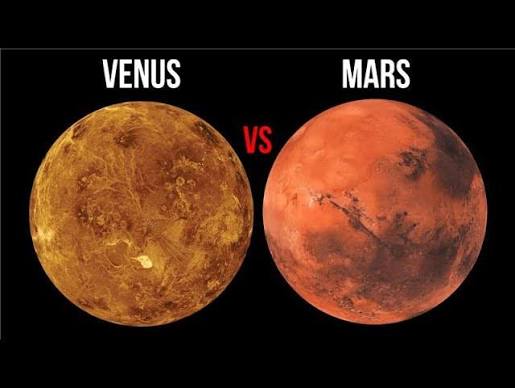
Colonizing space just got a plot twist nobody saw coming. Most people think Mars is the obvious next home for humanity. But Venus, that blazing hot neighbor, is quietly making a strong case. So, could colonizing Venus actually beat colonizing Mars?
Colonizing the Wrong Planet? Let’s Talk About Venus
Everybody loves Mars. Elon Musk wants to go there. NASA has rovers rolling around on it. Movies have been made about it. Mars gets all the attention, all the funding, and all the cool merchandise.
Meanwhile, Venus sits in the corner, misunderstood and underestimated.
Yes, Venus is extremely hot on the surface. Its temperatures hit around 900 degrees Fahrenheit. Its atmosphere is thick with carbon dioxide and clouds that rain sulfuric acid. Sounds awful, right?
However, here is the twist. Scientists are not suggesting we live on the surface of Venus. Instead, they are talking about floating cities in the clouds. That idea is not science fiction anymore. It is backed by serious research from NASA and space scientists around the world.
So before you book your one-way ticket to Mars, hear Venus out. It has more to offer than people think.
How Close Is Venus Compared to Mars?
Distance matters a lot in space travel. The farther a planet is, the longer the journey takes. A longer journey means more radiation exposure, more physical strain, and more cost.
Mars, at its farthest point from Earth, sits about 250 million miles away. Venus, at its farthest, is only around 163 million miles away. According to researchers, Venus is about 87 million miles closer to Earth than Mars at maximum distance.
This means travel to Venus could be 30 to 50 percent faster. That matters a great deal for safety. Astronauts in space face radiation and zero gravity for extended periods. Cutting that time in half is a massive health advantage.
Furthermore, a shorter trip means lower costs. Fewer supplies are needed. Rockets burn less fuel. Supply missions between Earth and a Venus colony would also be faster and cheaper.
In terms of travel time alone, Venus wins over Mars without much debate.
The Gravity Problem on Mars
Here is something most people do not think about when dreaming of colonizing Mars. Mars has only about 38 percent of Earth’s gravity. That is far less than what human bodies need to stay healthy.
Living in low gravity causes serious problems. Bones lose density over time. Muscles weaken faster. The heart and circulatory system also struggle to adapt. NASA studies show that even astronauts on the International Space Station, who experience zero gravity, suffer these effects after just a few months.
Mars gravity is better than zero, but it is not enough to keep humans truly healthy over the long term. Scientists do not yet know if 38 percent gravity is enough to prevent the worst effects. That is a big unknown.
Venus, on the other hand, has about 90 percent of Earth’s gravity. That is very close to what humans experience every day here on Earth. Research confirms that the gravitational force of Venus is about 0.9 times that of Earth, compared to just 0.4 times for Mars.
For long-term colonizing efforts, Venus gravity is a clear advantage. Colonists living in Venusian cloud cities would not experience the same bone and muscle loss risks as those on Mars.
What Are Venusian Cloud Cities?
Now here is where things get interesting. Scientists are not proposing that humans land on the scalding surface of Venus. They are proposing floating habitats in the upper cloud layer, about 30 to 40 miles above the surface.
At that altitude, something amazing happens. The temperature drops to between 32 and 122 degrees Fahrenheit. The air pressure becomes similar to Earth’s sea level. The radiation environment also becomes friendlier, because Venus’s thick atmosphere blocks much of the harmful cosmic radiation.
Big Think reports that suspending airships in the Venusian clouds is not only feasible but offers some of the most Earth-like conditions found anywhere in the solar system.
These habitats would float like blimps or airships. Because the atmosphere of Venus is thick with carbon dioxide, regular breathable air (a mix of nitrogen and oxygen) would actually act as a lifting gas. In other words, a sealed habitat filled with breathable air would naturally float in Venus’s thick atmosphere. No complex lifting technology would be needed.
NASA scientist Geoffrey Landis has been a key voice in this idea for years. His work, published through NASA, outlines how cloud-level colonizing of Venus is technically possible with the right engineering approach.
The concept even has a name. NASA calls it the High Altitude Venus Operational Concept, or HAVOC. The idea involves crewed airship missions floating through Venus’s cloud decks. While HAVOC is currently inactive, Science Array notes that the 2030s could bring renewed attention to cloud city development, especially as NASA’s DAVINCI mission prepares to explore Venus up close.
NASA’s DAVINCI Mission: A New Era for Venus Research
For decades, Mars got all of NASA’s attention. Venus was largely ignored after a series of Soviet Venera missions in the 1970s and 1980s.
That is now changing. NASA’s DAVINCI mission, which stands for Deep Atmosphere Venus Investigation of Noble gases, Chemistry, and Imaging, is scheduled to launch in 2029. It will drop a probe through the Venusian atmosphere, reaching the surface in 2031.
This mission will be the first time any spacecraft has entered Venus’s atmosphere in the 21st century. It will measure the chemical composition of the atmosphere in detail never seen before. Scientists also hope to learn if Venus was once more like Earth, with liquid water oceans and milder temperatures.
The Planetary Society explains that DAVINCI could completely reshape how we understand Venus, since most current research is based on data from missions in the 1970s and 1980s.
Additionally, ESA’s EnVision mission will orbit Venus in the early 2030s. Private companies like Rocket Lab are also planning small Venus probes in the near future.
All of this renewed interest in Venus points toward a future where colonizing Venus becomes a real conversation, not just a thought experiment.
Radiation: Venus Protects, Mars Does Not
One of the biggest threats in space colonizing missions is radiation. Outside Earth’s magnetic field and atmosphere, astronauts face intense bombardment from cosmic rays and solar radiation.
Mars has almost no atmosphere. Its thin layer of air provides very little protection. Mars also lacks a global magnetic field. That means radiation from space passes all the way to the surface. Colonists on Mars would need thick shielding, underground habitats, or both.
APU Edge research highlights that on Venus, the thick atmosphere absorbs, scatters, and deflects most of this radiation before it can reach the cloud layer where human habitats would float. This makes Venus considerably safer from a radiation standpoint.
For any serious long-term colonizing plan, radiation protection is essential. Venus handles this naturally. Mars requires expensive engineering solutions.
Solar Power: Venus Has a Near-Limitless Supply
Energy is everything for a space colony. Without power, life support systems fail. Without power, food production stops. Without power, communication with Earth cuts off.
Mars receives only about 43 percent of the sunlight that Earth does. Solar panels on Mars work, but they work much less efficiently. Dust storms also coat panels regularly and cut their output further. The famous dust storm that threatened NASA’s Opportunity rover showed just how severe this problem can be.
Venus, by contrast, is closer to the sun. Even through the thick cloud layer, solar energy at the cloud altitude is similar to what Earth receives. Medium’s analysis on Venus colonization points out that the energy availability at cloud level makes Venus extremely competitive for solar power generation.
Cloud city colonists would have access to strong, consistent solar energy. That means reliable power for all life support needs, manufacturing, and communication.
The Temperature Problem on the Surface
Let’s be honest about something. Venus on the surface is genuinely terrifying. Temperatures hit around 900 degrees Fahrenheit, which is hotter than Mercury, despite Mercury being much closer to the sun. The pressure at the surface is 90 times greater than at Earth’s sea level.
Nothing humans currently build could survive those conditions for long. Soviet Venera probes managed to survive only about an hour before being crushed and melted.
However, and this is key, the colonizing plan for Venus does not involve living on the surface. The cloud city concept completely sidesteps the surface problem. Colonists would never go down there. They would live and work at cloud altitude, where conditions are surprisingly comfortable.
This is fundamentally different from Mars colonizing. On Mars, colonists must deal with the surface directly. They need pressurized suits, underground tunnels, radiation shielding, and extreme cold protection. Temperatures on Mars drop below negative 70 degrees Celsius at night.
Venus cloud life avoids many of these direct-surface challenges. That is a big practical advantage for future colonizing projects.
What Would Daily Life Look Like on Venus?
Imagine waking up in a floating habitat drifting slowly through orange-tinted clouds. Outside the windows, thick golden haze stretches in every direction. The habitat hums with the sound of life support systems. A soft breeze of Venusian wind pushes you slowly around the planet.
Spaceyv.com describes the experience as surreal. Residents would wake to perpetual twilight, since the thick clouds dim the sun. Outside the hull, acidic mists and hissing winds swirl around the structure.
Inside, however, life would feel surprisingly normal by space colony standards. Gravity is close to Earth’s. Temperatures are manageable. Solar power keeps everything running smoothly.
Colonists would eat food grown in hydroponic gardens lit by artificial lighting. Water would be harvested from chemical reactions in the atmosphere. Oxygen would be produced and recycled continuously.
Manufacturing on Venus would be different from Mars. Erik Engheim’s Medium analysis notes that Venus colonists would need compact, flexible chemical processing plants. Since there is no ground to stand on, constructing new structures would be harder than on Mars. Early colonies would need to be very self-sufficient and resourceful.
Still, the overall lifestyle in a Venusian cloud city would be more physically comfortable than life on the surface of Mars. That matters enormously for long-term colonizing success.
Challenges of Colonizing Venus
Honestly, colonizing Venus is not without serious problems. It is important to address these fairly.
The atmosphere is full of sulfuric acid. Any material used on the exterior of cloud habitats must resist corrosion. This limits material choices and increases engineering complexity.
There is also no solid ground. Building additional habitat modules or expanding a colony requires creative solutions. Everything must float. Mistakes carry higher risks because there is no surface to fall back on if something goes wrong.
Water is also scarce on Venus. Mars, by contrast, has large deposits of ice at its polar caps. APU Edge notes that sourcing water on Mars could be relatively straightforward, while on Venus it requires chemical extraction from atmospheric compounds.
Communicating with Earth also faces challenges. As Venus rotates very slowly and in the opposite direction from Earth, communication windows and timing would differ from those on Mars.
Finally, the cloud city concept has never been tested. Mars colonizing concepts, while also untested, benefit from decades of surface research from rovers and landers. Venus has far less recent data, though the upcoming DAVINCI and EnVision missions aim to close that gap quickly.
Colonizing Mars: A Fair Look at the Competition
Mars absolutely deserves credit for being the more studied and currently more popular colonizing target.
Mars has a day that lasts about 24.6 hours. That is almost identical to Earth’s day length. Human circadian rhythms would adapt easily to that. Venus, by contrast, rotates so slowly that a single Venus day lasts longer than a Venus year.
Mars also has frozen water. Access to water is critical for any colony. Ice deposits near the Martian poles are well-documented. Some research even suggests liquid water may exist just below the surface in certain regions.
Mars has a thin but present atmosphere of carbon dioxide. That atmosphere could potentially be used in future terraforming plans. Carbon dioxide can be converted to oxygen through chemical processes or plant life.
Elon Musk and SpaceX have committed enormous resources to colonizing Mars. The Starship rocket is being developed with Mars missions as a primary goal. That level of private investment and public interest gives Mars a significant head start in terms of infrastructure planning.
Still, interest alone does not make Mars the objectively better choice. The scientific advantages of Venus deserve equal attention.
Could Both Planets Be Colonized?
Here is the good news. Colonizing space does not have to be an either-or choice. Earth has billions of people. Humanity has colonized every continent, from scorching deserts to frozen tundras. There is no reason future generations cannot pursue multiple space colonizing projects at the same time.
Venus and Mars offer different advantages. Venus is closer, has better gravity, better radiation protection, and strong solar energy potential. Mars has accessible water, solid ground, and more current research support.
A smart long-term space colonizing strategy might involve Venus cloud cities as an early stopping point. Shorter travel times make Venus easier to reach first. Knowledge gained from Venusian colonizing could then inform smarter Mars missions later.
Science Array points out that the Mars-versus-Venus debate really comes down to different colonization philosophies. Mars follows Earth’s familiar model of finding solid ground and building on it. Venus demands a completely new way of thinking, one that treats the sky itself as the foundation.
Both approaches push human engineering and creativity forward. Both deserve investment and serious scientific study.
The Bigger Picture: Colonizing Beyond Our Solar System
Everything humans learn from colonizing within our solar system feeds into a larger dream: reaching other star systems someday.
Every technical problem solved on Venus or Mars adds to our knowledge base. Every new life support system, every new material engineered to resist harsh environments, every new method of growing food in space brings humanity closer to becoming a truly spacefaring species.
Venus cloud city engineering, in particular, teaches skills that could apply to colonizing the upper atmospheres of gas giants like Jupiter and Saturn. Floating habitats, chemical processing in acidic environments, and managing life without solid ground are all relevant skills for a spacefaring civilization.
Mars colonizing, meanwhile, teaches skills relevant to any rocky planet or moon with a thin atmosphere. Both bodies of knowledge are valuable.
The real competition is not Venus versus Mars. The real goal is humanity versus the limits of what we think is possible.
Colonizing Venus: The Verdict
So, is colonizing Venus a better option than Mars?
Based on the science, there is a strong argument that Venus deserves far more attention than it currently gets. It is closer to Earth, offers near-Earth gravity, provides better radiation protection, and has excellent solar energy potential. The cloud city concept is technically feasible, backed by NASA research, and growing in scientific credibility.
The DAVINCI mission launching in 2029 could be the turning point. New data from Venus may reveal surprises that shift the colonizing conversation significantly.
Mars still has advantages. Its solid surface, accessible water ice, and current investment give it a head start. However, a head start is not the same as being the best long-term choice.
Colonizing Venus challenges assumptions. It demands creativity, flexible thinking, and a willingness to imagine human settlements not on the ground but drifting through the clouds of a neighboring world.
That is exactly the kind of bold, unconventional thinking that gets humanity off one planet and into the stars.
Sources and Further Reading
- NASA DAVINCI Mission Overview
- Big Think: How to Colonize Venus
- Medium: Why Colonize Venus Instead of Mars
- Medium: Is It Smarter to Colonize Venus Before Mars?