Introduction
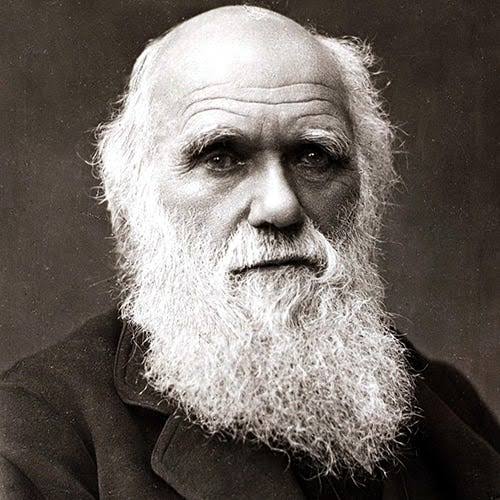
Charles Darwin was the man who made the world look twice at nature. His groundbreaking ideas turned old beliefs upside down and opened a new chapter in science. Consequently, the world has never thought about life the same way again.
Charles Darwin: The Curious Young Man Who Changed Everything
Charles Darwin was not always the great scientist the world now celebrates. In fact, as a young man, he was considered an average student. His father once told him he would be a disgrace to himself and his family. Therefore, it is quite funny that this same “disgrace” went on to write one of the most important books in human history.
Born on February 12, 1809, in Shrewsbury, England, Darwin grew up in a wealthy family. His grandfather, Erasmus Darwin, was also a thinker who had ideas about how living things change over time. So, in a way, curiosity ran in the family.
Initially, Darwin studied medicine at the University of Edinburgh. However, he could not stand the sight of surgery without anesthesia. As a result, he switched to studying theology at Cambridge University. Yet, science kept pulling him back. Eventually, a single voyage would change everything.
Learn more about Darwin’s early life here: https://www.britannica.com/biography/Charles-Darwin
The Voyage That Sparked a Revolution
In 1831, Charles Darwin boarded a ship called HMS Beagle. The journey was supposed to last two years. Instead, it lasted five years and took him around the world. During the trip, he collected plants, animals, rocks, and fossils from many places.
One of the most important stops was the Galapagos Islands, off the coast of South America. There, Darwin noticed something strange. Birds on different islands looked slightly different from each other. Moreover, they seemed perfectly suited to the food available on their specific island.
For example, finches with long beaks lived where food was buried deep in flowers. Meanwhile, finches with strong, short beaks lived where hard nuts were common. Darwin began to wonder: did these birds all come from the same ancestor? Furthermore, did they slowly change to survive in their environments?
These questions stayed with him for years. Gradually, the answers began to form into a big idea.
Read more about the Beagle voyage: https://www.nhm.ac.uk/discover/charles-darwin-beagle-voyage.html
Natural Selection: The Big Idea That Shocked the World
After returning from his voyage, Charles Darwin spent years thinking and writing. He read everything he could about animals, plants, and breeding. Then he came across an essay by Thomas Malthus about population and resources. That essay gave him a key piece of the puzzle.
Darwin realized that living things produce more offspring than can possibly survive. Therefore, only those best suited to their environment tend to survive and have young. Over time, useful traits get passed down to the next generation. Eventually, this process can lead to entirely new species.
He called this process natural selection. Simply put, nature picks the winners. The strong, the hidden, the fast, or the smart get to live and reproduce. The rest do not.
This idea was both simple and powerful. In addition, it explained so much about the natural world. Accordingly, Darwin knew he had discovered something big. However, he was also afraid of the reaction it would cause.
Explore how natural selection works: https://www.khanacademy.org/science/ap-biology/natural-selection/natural-selection-ap/a/principles-of-natural-selection
Charles Darwin Waited 20 Years to Publish
Here is a fun fact: Charles Darwin kept his big idea to himself for about 20 years. Yes, 20 whole years. He wrote notes, raised animals, studied plants, and kept testing his theory. Furthermore, he worried deeply about how the public and the church would react.
At the time, most people believed species were fixed and created by God exactly as they appeared. Therefore, the idea that species change over time was deeply controversial. Darwin wrote letters to friends describing his theory and called it “like confessing a murder.”
However, in 1858, he received a letter from a young scientist named Alfred Russel Wallace. Surprisingly, Wallace had come up with the same idea independently. This pushed Darwin into action. As a result, both scientists presented their ideas together to the scientific community that same year.
Then, in 1859, Charles Darwin published his book, “On the Origin of Species.” The first edition sold out on the very first day. Clearly, the world was ready, even if it was not sure how to feel about it.
See a digital version of the original book: https://darwin-online.org.uk/content/frameset?itemID=F373&viewtype=text&pageseq=1
The Reaction: Love, Anger, and Cartoons
When “On the Origin of Species” was published, the world exploded with opinions. Some scientists praised it immediately. Others were outraged. Additionally, the church was deeply upset by the suggestion that humans shared a common ancestor with apes.
Newspapers ran cartoons of Darwin with an ape’s body. People mocked him in public. Nevertheless, the scientific evidence kept growing in his favor. Gradually, more and more scientists began to accept the theory of evolution.
One of the most famous moments came in 1860 at a public debate. Thomas Huxley, a strong supporter of Darwin, faced Bishop Samuel Wilberforce. The bishop asked Huxley if he was descended from an ape on his grandmother’s or grandfather’s side. Huxley cleverly replied that he would rather be descended from an ape than from someone who used intelligence to obscure the truth. The crowd went wild.
Over time, the criticism quieted down. Science moved forward, and Darwin’s ideas became the foundation of modern biology.
Read about the historical Darwin debate: https://www.oxfordreference.com/display/10.1093/oi/authority.20110803095710377
Charles Darwin and the Tree of Life
One of the most beautiful ideas that Charles Darwin introduced was the “tree of life.” He proposed that all living things are related. Therefore, if you go back far enough, every creature on Earth shares a common ancestor.
Think about that for a moment. You and your dog share a very distant relative. Similarly, you and a mushroom are connected by an incredibly ancient ancestor. This idea was radical in Darwin’s time. Today, however, modern genetics has confirmed it in stunning detail.
Scientists have now mapped the genomes of thousands of species. Furthermore, the genetic similarities between humans and chimpanzees are about 98.7%. Notably, humans share around 85% of their DNA with mice and about 60% with fruit flies. Darwin had no idea about DNA, yet his tree of life turned out to be entirely accurate.
Explore the modern tree of life project: https://tree.opentreeoflife.org/opentree/argus/opentree14.9@ott93302
How Charles Darwin Influenced Modern Science
The influence of Charles Darwin on modern science is almost impossible to overstate. His theory did not just change biology. In fact, it changed how humans think about themselves and their place in the universe.
Before Darwin, people thought humans were separate from nature. After Darwin, it became clear that humans are part of nature. Additionally, his method of thinking, gathering evidence, testing ideas, and updating conclusions, became a model for scientific research everywhere.
His work also sparked new fields of study. Evolutionary psychology explores how human behavior grew from survival needs. Evolutionary medicine looks at why humans get certain diseases. Biogeography studies how living things spread across the planet. All of these fields owe a debt to Darwin.
Moreover, the discovery of genetics by Gregor Mendel helped explain the mechanism behind Darwin’s ideas. When scientists combined Darwin’s theory with Mendel’s genetics in the 20th century, it created what is called the Modern Synthesis. This became the backbone of all biological science.
Learn about the Modern Synthesis: https://www.nature.com/scitable/knowledge/library/the-modern-synthesis-of-genetics-and-evolution-13228791/
Charles Darwin and the Birth of Evolutionary Biology
Before Charles Darwin, biology was mostly about naming and classifying things. Scientists would find a creature, give it a name, and put it in a category. It was organized, but it did not explain much. Darwin changed all of that.
With the theory of evolution, biology got a story. Suddenly, the differences between species made sense. The strange features of animals made sense. The fossils in the ground made sense. Everything clicked together like puzzle pieces.
Consequently, biology became a science of causes and processes, not just names and categories. This shift was enormous. It opened the door to understanding how viruses evolve, why antibiotic resistance develops, and how new species form. All of these questions flow directly from Darwin’s original insight.
Today, evolutionary biology is one of the most active areas of science. Researchers study everything from the evolution of cancer cells to how plants adapt to climate change. Furthermore, the same principles Darwin described are now applied in computer science through evolutionary algorithms.
Read about recent evolutionary biology research: https://www.cell.com/current-biology/home
Darwin’s Ideas and the Fossil Record
One strong piece of evidence for Darwin’s theory comes from fossils. Charles Darwin himself spent a lot of time studying fossils during and after his voyage on the Beagle. He found the bones of giant ground sloths and enormous armadillos in South America. Interestingly, these looked like bigger, older versions of animals still living there.
This suggested that modern animals were related to ancient ones. Moreover, it supported the idea that species change over long periods. Darwin knew the fossil record was incomplete. He even admitted this honestly in his book. However, he predicted that more fossils would be found to fill in the gaps.
Since then, thousands of fossils have confirmed his predictions. The discovery of Tiktaalik, for instance, showed a fish with early limb-like fins, a clear step between fish and land animals. Similarly, the fossil record of horses shows a clear path from small, multi-toed animals to the large, single-hoofed horses we know today.
Each new fossil discovery adds more support to what Darwin originally proposed. The record keeps growing, and the picture keeps getting clearer.
Read about the Tiktaalik fossil discovery: https://www.pnas.org/doi/10.1073/pnas.0509064103
Genetics Confirms What Charles Darwin Predicted
Charles Darwin had no idea what DNA was. In the 1800s, nobody did. Yet when scientists discovered the structure of DNA in 1953, it confirmed everything Darwin had proposed. The evidence was written in the code of life itself.
DNA carries the instructions for building every living thing. Moreover, mutations in DNA create the variation that Darwin described. Natural selection then acts on those variations. The fittest survive, and their traits get passed on.
Today, researchers can sequence entire genomes quickly and cheaply. As a result, they can trace the evolutionary history of species with incredible precision. Ancient DNA from fossils has even allowed scientists to study extinct creatures like mammoths and Neanderthals.
The connection between genetics and evolution is now so well understood that it is used in medicine. For example, understanding how viruses evolve helps scientists develop better vaccines. Similarly, studying bacterial evolution helps doctors fight antibiotic resistance.
Explore the latest in genomics and evolution: https://www.genome.gov/about-genomics/educational-resources/fact-sheets/genomics-and-evolution
Charles Darwin’s Legacy Beyond Biology
The impact of Charles Darwin goes far beyond the science lab. His ideas changed philosophy, social science, and even how we think about progress. Because of Darwin, people began to see change as a natural and ongoing process rather than a sign of disorder.
Philosophers began to apply evolutionary thinking to ideas and cultures. Some argued that societies evolve just like species do. Furthermore, psychologists began to study human emotions and behaviors through an evolutionary lens.
However, it is important to note that Darwin’s ideas were sometimes misused. A harmful movement called Social Darwinism twisted his ideas to justify racism and inequality. This was never what Darwin intended. His work was about biology, not human society.
Darwin himself was known to be a kind and gentle man. He opposed slavery strongly. Additionally, he respected the dignity of all human beings. Therefore, the misuse of his name in harmful ideologies is a lesson in how powerful ideas can be distorted.
Read about the misuse of Darwin’s ideas in history: https://www.historicengland.org.uk/research/results/reports/3204
Charles Darwin in the Age of Modern Discovery
Today, Charles Darwin would probably be amazed by the tools scientists have. From gene-sequencing machines to powerful telescopes, the ability to gather evidence has exploded. Yet, the approach he championed remains the same: observe, question, test, and revise.
Modern evolutionary science builds directly on his foundation. For instance, CRISPR gene-editing technology allows scientists to study how tiny genetic changes affect living things. This is essentially watching evolution happen in real time.
Additionally, scientists now study evolution at the molecular level. They track how proteins change over millions of years and use that data to understand diseases. The field of evolutionary medicine, still relatively young, applies Darwin’s ideas to treat human illness in new ways.
Space exploration has even picked up a Darwinian thread. Scientists searching for life on other planets think about how life might evolve under different conditions. Would natural selection work the same way on Mars or Europa? These are questions Darwin never imagined, but they come from his world of thinking.
Read about evolutionary medicine today: https://evolutionarymedicinejournal.com
Charles Darwin and Climate Change Science
One area where Darwin’s thinking has become especially relevant is climate change. Species are being forced to adapt rapidly to shifting environments. Researchers are watching evolution happen faster than ever before.
For example, some fish species in warming oceans are already showing genetic changes. Similarly, certain plants are flowering earlier due to rising temperatures. These are real-time examples of natural selection responding to environmental pressure.
Charles Darwin described this process with no knowledge of climate science. Nevertheless, his framework perfectly explains what scientists are now observing. Therefore, his work is not just historical; it is actively being used to understand one of the biggest challenges humanity faces.
Studies on rapid evolution in response to climate change draw heavily on Darwinian principles. Researchers track how populations shift, which traits survive, and how quickly change can happen. The answers carry serious weight for conservation and biodiversity planning.
Read about evolution and climate change: https://www.nature.com/articles/s41559-019-1015-5
Conclusion: Charles Darwin’s Endless Legacy
Charles Darwin started a revolution with a notebook, a boat ride, and an unquenchable curiosity. He looked at the natural world with open eyes and dared to follow the evidence wherever it led. As a result, science was never the same again.
His theory of evolution by natural selection remains one of the most tested and confirmed ideas in all of science. Additionally, it continues to grow and deepen as new discoveries add more layers to the story. Each advance in genetics, paleontology, and ecology adds more support to the framework he built.
Most importantly, Darwin showed the world how to think. He demonstrated that careful observation, honest questioning, and willingness to be proven wrong are the highest virtues in science. Consequently, every scientist working today walks a path that Charles Darwin helped clear.
He was not perfect. He had doubts, fears, and blind spots. However, his commitment to truth over comfort set a standard that still inspires people everywhere. The world is still catching up to what Charles Darwin started nearly two centuries ago.
Sources and Further Reading
- Britannica – Charles Darwin Biography: https://www.britannica.com/biography/Charles-Darwin
- Natural History Museum – The Beagle Voyage: https://www.nhm.ac.uk/discover/charles-darwin-beagle-voyage.html
- Khan Academy – Principles of Natural Selection: https://www.khanacademy.org/science/ap-biology/natural-selection/natural-selection-ap/a/principles-of-natural-selection
- Darwin Online – On the Origin of Species: https://darwin-online.org.uk/content/frameset?itemID=F373&viewtype=text&pageseq=1