
Blood group science is one of the greatest medical breakthroughs in human history. Before scientists figured it out, blood transfusions were basically a coin toss. This article walks you through the full story, from the first experiments to the discoveries still happening today.
Blood Group 101: What Are We Even Talking About?
Before we dive into the history, let us quickly set the stage.
Your blood group is a classification based on specific proteins and sugars on the surface of your red blood cells. These markers are called antigens. Your immune system uses them to tell the difference between “your” blood and someone else’s.
There are currently more than 40 recognized blood group systems in humans. The most well-known ones are the ABO system and the Rh system. Together, they form the basis of compatibility testing for transfusions and organ transplants.
Getting the wrong blood group during a transfusion can trigger a deadly immune reaction. So, understanding blood group differences is not just academic. It is, quite literally, a matter of life and death.
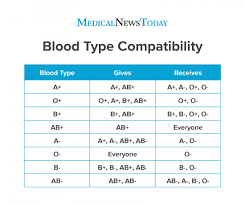
For a simple breakdown, the American Red Cross has an easy guide on blood group types and compatibility.
Before the Discovery: A Bloody Mess
Let us travel back to the 1600s for a moment.
Physicians knew blood was important. They could see that losing too much of it was fatal. So, naturally, some of them tried to replace it with other blood. The results were not pretty.
In 1667, a French physician named Jean-Baptiste Denis transfused lamb blood into a human patient. The patient somehow survived the first attempt. He did not survive the second. Denis was later tried for murder, though he was eventually acquitted.
After that mess, France, England, and parts of Europe banned blood transfusions entirely for almost 150 years. You can imagine why.
Even when doctors in the 1800s started trying again with human-to-human transfusions, outcomes were wildly inconsistent. Some patients recovered. Others died suddenly and mysteriously. No one could explain it, because no one yet understood blood group differences.
Read more about early transfusion history at the National Library of Medicine
The Man Who Changed Everything: Karl Landsteiner
In 1900, an Austrian physician named Karl Landsteiner made the discovery that would reshape medicine forever.
Landsteiner was working at the Vienna Pathological Institute. He noticed something curious during his experiments. When he mixed blood from different people, sometimes the red blood cells clumped together. Other times they did not.
This clumping, called agglutination, was not random. It followed a pattern.
Landsteiner systematically collected blood from himself and five colleagues. He then separated each sample into red blood cells and serum (the liquid portion). After that, he mixed every possible combination.
What he found was remarkable.
The clumping happened based on predictable patterns. Landsteiner grouped the blood into three categories. He called them A, B, and C. His student Alfred von Decastello and colleague Adriano Sturli later identified a fourth group in 1902. That fourth group eventually got renamed O for the original “C” and the new one became AB.
So the ABO blood group system was born.
Landsteiner published his findings in a short paper in 1901. At the time, not many people paid attention. Decades later, the world finally caught up. In 1930, Landsteiner received the Nobel Prize in Physiology or Medicine for this discovery.
Read Landsteiner’s original work referenced at Nobel Prize archives
How the ABO Blood Group System Actually Works
Now that we know who discovered it, let us understand what they actually found.
The ABO system is based on two antigens, called A and B. Your red blood cells can carry one, both, or neither. That gives us four possible blood group types.
Blood Group A: Red blood cells carry the A antigen. Your plasma contains anti-B antibodies.
Blood Group B: Red blood cells carry the B antigen. Your plasma contains anti-A antibodies.
Blood Group AB: Red blood cells carry both A and B antigens. Your plasma contains no ABO antibodies.
Blood Group O: Red blood cells carry neither antigen. Your plasma contains both anti-A and anti-B antibodies.
When blood group types are mismatched during a transfusion, the antibodies in the recipient’s plasma attack the donor’s red blood cells. This causes agglutination, hemolysis (cell destruction), and sometimes organ failure or death.
That is why blood group matching before transfusion is so critical.
Learn more from the World Health Organization’s guide on blood safety
The Rh Factor: A Second Layer to Blood Group Science
The ABO system was a massive step forward. But it did not explain everything.
In 1937, Landsteiner and his colleague Alexander Wiener discovered another important blood group antigen. They found it after experimenting with blood from rhesus monkeys. That is how it got its name, the Rh factor.
If your red blood cells carry the Rh antigen, you are Rh-positive. If they do not, you are Rh-negative. This gives us the “+” or “-” you see after blood group letters, like A+ or O-.
The Rh factor matters enormously in pregnancy. When an Rh-negative mother carries an Rh-positive baby, her immune system can develop antibodies against the baby’s blood. This condition is called hemolytic disease of the fetus and newborn (HDFN). In serious cases, it can be fatal.
The discovery of the Rh system allowed doctors to prevent this with a treatment called Rh immunoglobulin (RhIg), also known as the Rh shot or RhoGAM. Today, this treatment saves thousands of babies every year.
More on Rh incompatibility at the CDC
Blood Groups in Transfusion Medicine: Putting It All Together
Once scientists understood blood group systems, medicine changed rapidly.
The First World War had shown the devastating need for battlefield transfusions. By the Second World War, blood group typing had become standard. Blood banks were set up. Donation programs expanded. Matching blood group before transfusion became a life-saving protocol.
Today, before any transfusion, a hospital performs two key tests. First, ABO and Rh blood group typing identifies the patient’s type. Second, a crossmatch test mixes the donor’s blood with the patient’s serum to check for compatibility.
These two steps have made modern surgery, trauma care, cancer treatment, and childbirth dramatically safer.
According to the World Health Organization, over 118 million blood donations are collected globally every year. Every single one of those donations requires blood group testing before it reaches a patient.
WHO global blood supply report
Other Important Blood Group Systems Beyond ABO and Rh
The ABO and Rh systems get most of the spotlight. However, scientists have since identified dozens of other blood group systems.
The Kell System, discovered in 1946, is the third most clinically important. It can cause severe transfusion reactions and hemolytic disease in newborns.
The Duffy System, found in 1950, is particularly interesting. Research shows that people who lack the Duffy antigen (common in people of African descent) have significant resistance to certain strains of malaria.
The MNS System was actually discovered before the ABO system was fully understood. It was identified in 1927. It has 50 known antigens and remains an area of active research.
The Lewis System and Kidd System are also clinically relevant. Kidd antibodies are known for causing delayed transfusion reactions that are hard to detect.
Each of these blood group systems adds a layer of complexity. It also adds precision to modern transfusion medicine.
International Society of Blood Transfusion maintains a full registry of blood group systems
Genetics and Blood Group: What Your DNA Says
Your blood group is inherited. Specifically, it follows Mendelian genetics, which means your blood group depends on which alleles you inherit from each parent.
For the ABO system, three main alleles exist: I^A, I^B, and i. You inherit one allele from your mother and one from your father. The combination determines your blood group.
For example, if you inherit I^A from both parents, you are blood group A. If you inherit I^A from one and i from the other, you are still blood group A, because I^A is dominant. However, you can pass on the i allele to your children.
This genetic basis means blood group can be used in paternity testing, forensic analysis, and disease research. Scientists have linked certain blood group types to varying risks of specific conditions.
Studies suggest blood group A individuals may have a higher risk of blood clotting disorders. Blood group O individuals may have a lower risk of certain cardiovascular diseases. Research continues to explore these connections.
A 2020 study on blood group and COVID-19 susceptibility published in Blood Advances
Blood Group and Disease: Surprising Connections
One of the most exciting areas of current research is the link between blood group and disease susceptibility.
Studies during the COVID-19 pandemic found that blood group O may offer some protective effect against severe infection. People with blood group A appeared to face slightly higher risks. The mechanisms behind this are still being studied.
Blood group also influences susceptibility to certain infections beyond COVID. Research shows that blood group B individuals are more susceptible to E. coli infections of the urinary tract. Blood group A individuals may be more vulnerable to smallpox (historically) and certain gastric cancers.
On the other hand, blood group O individuals show higher rates of peptic ulcers due to H. pylori infections. This seems linked to the fact that the bacteria bind more easily to cells without A or B antigens.
Researchers are also investigating blood group associations with Alzheimer’s disease, stroke risk, and even fertility outcomes.
A comprehensive review on blood group and disease at PLOS Medicine
The 2022 Discovery: A New Blood Group System
Here is something that might surprise you.
In 2022, a team of scientists from the UK identified a brand-new blood group system. They called it the Er system. Researchers at the NHS Blood and Transplant service and the University of Bristol published the findings in the journal Blood.
The discovery explained cases of rare, life-threatening reactions during pregnancy that had puzzled doctors for decades. Three previously unrelated cases of hemolytic disease in newborns were finally linked to antibodies in this new blood group system.
The researchers identified the molecular basis of the Er antigens, something that had never been fully understood before. This kind of discovery shows that even after more than 120 years, blood group science still has surprises for us.
Read the 2022 Er blood group discovery in Blood journal
Blood Group Research Today: Where Science Is Heading
Modern blood group research has moved far beyond simple compatibility testing.
Scientists now use genomic sequencing to identify blood group antigens at the DNA level. This allows for far more precise matching between donors and recipients. It also allows for the prediction of rare blood group phenotypes without needing actual blood samples.
Extended blood group matching is now being explored for patients with sickle cell disease. These patients require frequent transfusions throughout their lives. Repeated transfusions can cause the immune system to develop antibodies against minor blood group antigens, making future transfusions harder to match.
Precision blood group matching, enabled by genomics, aims to prevent this complication.
Researchers are also working on universal donor blood, blood that has been modified to remove its A and B antigens using enzymes. If successful, this could dramatically simplify transfusion medicine and reduce the burden of blood shortages.
Read about enzyme-converted universal donor blood research at Nature Microbiology
Blood Group Myths Worth Busting
Let us clear up a few popular misconceptions.
Myth 1: Blood group O is always a universal donor. This is mostly true for red blood cells. But it is not true for plasma. Blood group O plasma contains both anti-A and anti-B antibodies, which can cause reactions in other blood group types.
Myth 2: Your blood group changes over time. Your blood group is genetically fixed. It does not change unless you receive a bone marrow transplant, which is a rare and special circumstance.
Myth 3: Blood group diets are scientifically proven. The idea that people should eat differently based on their blood group has been widely promoted. However, scientific evidence does not support this. Multiple large studies have found no benefit specific to blood group.
Myth 4: AB is the rarest blood group. Actually, AB is rare in some populations. However, the rarest blood group of all is Rh-null, sometimes called “golden blood.” People with this blood group have no Rh antigens at all. Fewer than 50 people in the world are known to have it.
Smithsonian Magazine’s article on Rh-null blood
Blood Group Frequencies Around the World
Blood group distribution varies significantly across populations.
Blood group O is the most common globally, carried by about 44% of the world’s population. Blood group A is second, at around 42%. Blood group B is found in about 10% of people. Blood group AB is the least common, at roughly 4%.
However, these global averages mask significant regional differences. In some East Asian populations, blood group B is considerably more common. In populations with Indigenous American ancestry, blood group O is overwhelmingly predominant, sometimes reaching close to 100%.
The Rh-positive factor is found in about 85% of the global population. Rh-negative rates are highest among people of European descent.
These patterns have been invaluable in anthropology, helping scientists trace migration patterns of ancient human populations.
Stanford Blood Center’s breakdown of blood group frequency by population
The People Who Built on Landsteiner’s Work
Karl Landsteiner may have started it, but many scientists contributed to blood group science after him.
Philip Levine and Rufus Stetson discovered the Rh factor’s clinical importance in 1939, before Landsteiner and Wiener published their work. Their research on a patient who suffered a severe transfusion reaction after receiving her husband’s blood laid the foundation for understanding Rh incompatibility.
Alexander Wiener was Landsteiner’s co-discoverer of the Rh system. He spent decades expanding knowledge of Rh antigen variants, though he also had some famous scientific disputes along the way.
Patrick Mollison was a British physician who revolutionized transfusion medicine in the mid-20th century. His textbook, Blood Transfusion in Clinical Medicine, became the definitive reference for decades.
Marie Curie (yes, that Marie Curie) contributed indirectly during World War I. She helped develop mobile X-ray units that were used alongside early battlefield blood transfusion efforts, improving trauma care across the board.
Donating Blood: The Legacy Lives On
Every blood group discovery made it possible for more people to donate and receive blood safely.
Today, blood donation systems around the world are built on the foundation of blood group science. In most countries, donated blood is typed, screened for infectious diseases, separated into components (red cells, plasma, platelets), and stored for later use.
Each whole blood donation can save up to three lives when separated into components. Platelets, for instance, are critical for cancer patients. Red blood cells are needed for surgery and trauma. Plasma is used for burns, liver disease, and clotting disorders.
Modern blood banks could not function without blood group classification. Every bag of blood you see in a hospital has its blood group clearly labeled.
Donate and learn more at the WHO Blood Safety page
A Timeline of Key Blood Group Milestones
Here is a quick look at how far we have come.
1667: Jean-Baptiste Denis performs the first documented blood transfusion between species.
1818: James Blundell performs the first successful human-to-human transfusion.
1900: Karl Landsteiner publishes the discovery of the ABO blood group system.
1902: The fourth blood group (AB) is identified.
1914: The first anticoagulant (sodium citrate) is used to preserve blood for storage.
1930: Landsteiner wins the Nobel Prize in Medicine.
1937: Landsteiner and Wiener identify the Rh factor.
1940: The first blood bank in the United States is established at Cook County Hospital in Chicago.
1946: The Kell blood group system is discovered.
1950: The Duffy blood group system is found.
2012: Full genomic sequencing of blood group antigens becomes possible.
2022: The Er blood group system is officially classified.
Conclusion: Blood Group Science Is Still Very Much Alive
The story of blood group discovery is not a finished chapter. It is an ongoing story.
Landsteiner’s 1900 paper launched more than a century of research that has saved hundreds of millions of lives. Modern genomics, precision medicine, and transfusion science continue to build on that foundation.
Blood group research today touches cancer treatment, maternal health, infectious disease, and even pandemic response. Each new discovery opens another door.
The next time a doctor asks for your blood group, remember that question has a history stretching back more than 120 years. It connects you to every scientist, every physician, and every patient who has ever benefited from this knowledge.
And if you are the rare person with Rh-null blood, congratulations. You are basically a medical legend.
Sources and Further Reading
- Karl Landsteiner – Nobel Prize Biography
- Early History of Blood Transfusion – National Library of Medicine
- ABO Blood Types – American Red Cross
- WHO Blood Safety and Availability Fact Sheet