
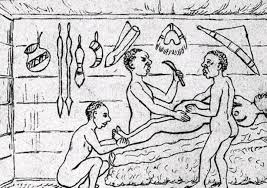
Cesarean section is one of the oldest known surgical procedures in the world. Surprisingly, an African kingdom performed it with great skill long before European doctors figured it out.
Cesarean Section: A Brief Look at Its Origins
The cesarean section has been part of human history for a very long time. Most people think of it as a modern invention. However, the truth is far more interesting than that.
Historically, the procedure was used mostly when the mother had already died. The goal was to save the baby. In addition, early attempts in Europe often ended in the mother’s death as well. (Source: British Journal of Obstetrics and Gynaecology)
Therefore, survival after a cesarean section was extremely rare in early European medicine. Surgeons lacked proper tools, knowledge, and hygiene practices. Most women who underwent the procedure did not live to tell about it.
Interestingly, however, things were quite different in the Great Lakes region of Africa. A small kingdom there was doing something that European medicine could not yet achieve. They were performing cesarean sections where both the mother and baby survived.
The Bunyoro Kingdom and Its Remarkable Surgical Tradition
The Bunyoro Kingdom, located in what is today western Uganda, had skilled healers for centuries. These healers used herbal medicine, surgical tools, and careful technique. Furthermore, they passed their knowledge down through generations.
The kingdom was one of the most powerful in the Great Lakes region during the 16th to 19th centuries. Consequently, it developed strong traditions in many areas, including medicine. (Source: Encyclopaedia Britannica – Bunyoro)
Their healers understood the human body in practical ways. They knew how to manage pain, control bleeding, and prevent infection using local plants. So, by the time European explorers arrived, Bunyoro healers had already mastered techniques that left outsiders amazed.
The 1879 Eyewitness Account That Changed Everything
The most famous evidence of cesarean section surgery in Bunyoro comes from a British explorer named Robert Felkin. In 1879, Felkin witnessed a cesarean section performed in the Bunyoro Kingdom. He recorded his experience in great detail.
According to his account, a young woman was about to give birth. The baby was not coming out normally. As a result, a healer stepped in to perform the cesarean section. Felkin watched the entire operation from start to finish.
The healer first gave the woman a drink made from banana wine. This helped relax her body and reduce pain. Then, the surgical area was washed carefully with the same banana wine. Clearly, the healer understood something about cleanliness before the concept of antiseptics became common in Europe.
The healer used a sharp knife to make a clean cut. Moreover, the assistant pressed on the uterus to help manage bleeding. The healer then removed the baby and the placenta with careful, steady hands. Afterward, the wound was treated with herbal paste and bound tightly with iron spikes to hold it together. (Source: Edinburgh Medical Journal, Felkin 1884)
Within 11 days, Felkin noted that the woman was healing well. Both the mother and baby survived the cesarean section. Felkin was so impressed that he wrote about it in the Edinburgh Medical Journal in 1884.
Cesarean Section in Europe During the Same Period
To understand just how advanced this Bunyoro cesarean section was, it helps to look at Europe during the same time. European surgeons had been attempting the procedure for centuries. Yet, results were consistently poor.
Until the late 1800s, most women who underwent a cesarean section in Europe died shortly afterward. The main cause was infection. European surgeons did not yet know that germs caused infection. As a result, they operated in unsanitary conditions with unwashed hands and tools. (Source: National Library of Medicine)
Furthermore, there was no reliable way to close the uterus after surgery. Surgeons would cut it open but leave it unsutured. Consequently, the mother would bleed to death or die from infection within days.
It was only in 1882 that German doctors Max Sanger and Eduard Porro began properly suturing the uterus during a cesarean section. This single change dramatically improved survival rates in Europe. (Source: World Journal of Surgery)
So, by that timeline, the Bunyoro healer in 1879 was doing something more advanced than what most European surgeons were doing at the very same time.
The Techniques That Made the Difference
Several key techniques made the Bunyoro cesarean section so effective. First, the use of banana wine served two purposes. It worked as a mild sedative for the patient. Additionally, it acted as an antiseptic to clean the wound. This shows a clear understanding of infection control, even without germ theory.
Second, the healer used controlled, deliberate incisions. The cut was clean and targeted. European surgeons, by contrast, often made rough cuts that damaged surrounding tissue.
Third, the management of bleeding was active and intentional. The assistant pressed on the uterus to reduce blood loss. In comparison, many European procedures left bleeding largely uncontrolled.
Fourth, the wound closure method was practical and effective. Instead of sutures, the healer used cauterization and tight binding with iron spikes to hold the skin together. This reduced the risk of reopening. (Source: NCBI – History of Cesarean Section)
Each of these steps reflected genuine medical understanding. Together, they resulted in a successful cesarean section long before Europe matched the same standard.
How African Medical Knowledge Was Often Overlooked
Despite Felkin’s written account, the Bunyoro cesarean section did not receive the attention it deserved. European academia of the time was not quick to credit African healers. Instead, many dismissed indigenous medicine as primitive or superstitious.
This attitude was common during the colonial era. European powers were expanding across Africa. As a result, African knowledge systems were often belittled or ignored entirely.
Yet, the evidence was there in writing. Felkin had seen it with his own eyes. He recorded it in a respected medical journal. Still, the world of medicine continued to center its history on European developments. (Source: Journal of Obstetrics and Gynaecology)
Today, medical historians are beginning to give this story its proper place. The Bunyoro cesarean section is now recognized as a landmark moment in surgical history. Furthermore, it challenges long-held assumptions about where medical knowledge originated.
Cesarean Section in the Modern World
Today, cesarean section is one of the most common surgical procedures worldwide. According to the World Health Organization, around 21% of all births globally are done through cesarean section. (Source: World Health Organization)
Modern cesarean section surgery uses general or regional anesthesia, sterile tools, and carefully placed sutures. Recovery is fast, and complications are relatively rare when proper care is given. Without question, it saves millions of lives every year.
However, the roots of this procedure go back much further than most people realize. As the Bunyoro case shows, effective cesarean section surgery was happening in Africa in the 19th century. This was before European medicine had figured out how to do it safely.
Lessons From the Bunyoro Cesarean Section
The story of the Bunyoro cesarean section teaches several important lessons. To begin with, it shows that medical knowledge is not the property of any single culture. Healing traditions exist all over the world. Many of them are highly effective.
Additionally, it shows the danger of dismissing indigenous knowledge. When European colonizers labeled African medicine as backward, they missed an opportunity to learn. History is now correcting that mistake.
Also, the Bunyoro case proves that observation and practice can lead to great results even without formal scientific training. The healer did not know germ theory. Yet, the healer practiced antisepsis through experience. That is a powerful thing.
Finally, stories like this one remind us to look beyond the standard history books. Medical history is richer and wider than we are usually taught. (Source: African Journal of Primary Health Care)
A Legacy Worth Celebrating
The Bunyoro Kingdom left behind a legacy that deserves celebration and recognition. Their approach to the cesarean section was not lucky or accidental. It was the result of careful observation, skilled practice, and genuine medical knowledge.
Robert Felkin, for all his outsider perspective, had the good sense to document what he saw. Thanks to his account, the world knows about this extraordinary surgical tradition. Moreover, his notes gave medical historians a reliable source to work with.
Today, Uganda is proud of this history. It stands as proof that African civilizations contributed meaningfully to human knowledge. The cesarean section story from Bunyoro is one of many examples of African excellence that history is slowly uncovering.
So, the next time someone talks about the history of cesarean section surgery, the Bunyoro Kingdom deserves a rightful place in that conversation.
Sources and Further Reading
- Felkin, R.W. (1884). Notes on Labour in Central Africa. Edinburgh Medical Journal. Available at: https://www.ncbi.nlm.nih.gov/pmc/articles/PMC5830071/
- World Health Organization. (2021). Caesarean section rates continue to rise. Available at: https://www.who.int/news/item/16-06-2021-caesarean-section-rates-continue-to-rise
- National Library of Medicine. History of Cesarean Section. Available at: https://www.ncbi.nlm.nih.gov/pmc/articles/PMC2563046/
- Encyclopaedia Britannica. Bunyoro. Available at: https://www.britannica.com/place/Bunyoro