
Sickle cell started as the body’s clever trick against malaria. However, that trick came with a painful price tag. This article breaks down how and why it happened.
The Big Picture: Bodies That Outsmarted Malaria
Your body is surprisingly good at fighting back. Over thousands of years, humans in malaria-heavy regions developed a genetic shortcut. That shortcut is what we now call the sickle cell trait.
Malaria kills quickly. It still kills about 600,000 people every year, according to the World Health Organization. So, the human body found a workaround. People with one sickle cell gene became harder for the malaria parasite to infect.
That sounds like a win. But evolution rarely gives without taking something back. This genetic workaround came with strings attached, and those strings are still tangled today.
Sickle Cell and the Blood Cell Story
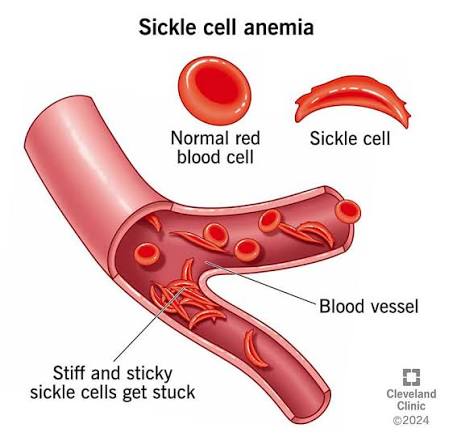
To understand sickle cell, you need to understand red blood cells first. Normal red blood cells are round and flexible. They slide through blood vessels easily. They carry oxygen everywhere in the body.
People with sickle cell disease have red blood cells that look different. Instead of round, the cells are shaped like a crescent or a sickle. That shape causes big problems. The cells get stuck, break apart, and block blood flow.
This all comes down to hemoglobin. Hemoglobin is the protein inside red blood cells that carries oxygen. A single gene mutation changes the hemoglobin structure. That small change is enough to reshape the entire cell.
You can read more about how hemoglobin works from the National Heart, Lung, and Blood Institute.
How Malaria Meets Its Match
Malaria is caused by a parasite called Plasmodium. It travels through mosquito bites. Once inside the blood, it attacks red blood cells. It uses those cells to multiply and spread.
Here is the interesting part. The malaria parasite struggles to survive inside sickle-shaped cells. The altered hemoglobin creates a hostile environment. In some cases, the infected cell destroys itself before the parasite can multiply.
People who carry just one sickle cell gene, not two, get this protection. Their blood has a mix of normal and sickle-shaped cells. That mix is enough to confuse and slow the parasite down. This is called the sickle cell trait.
A 2021 study published in Nature Medicine confirmed that people with one sickle cell gene have significantly lower risk of severe malaria.
The Trade-Off Nobody Asked For
So if sickle cell trait protects against malaria, what is the problem? The problem shows up when two carriers have children together.
Each parent has one normal gene and one sickle cell gene. Each child has a 25% chance of inheriting two sickle cell genes. Two copies mean no normal hemoglobin at all. That is when sickle cell disease begins.
Sickle cell disease is not a mild condition. It brings chronic pain, organ damage, strokes, and shortened life expectancy. The body was trying to protect itself from malaria. Instead, it created a new crisis entirely.
This is what scientists call a balanced polymorphism. Protection and harm sitting side by side in the same gene. The American Society of Hematology describes this evolutionary push and pull well.
Who Carries the Sickle Cell Gene?
Sickle cell trait is most common in populations from certain regions. These include sub-Saharan Africa, the Middle East, India, and the Mediterranean. The pattern is not random. It follows the path of malaria.
In Nigeria alone, about 25% of the population carries the sickle cell gene. That is roughly 50 million people. In some parts of Uganda and Ghana, the number goes even higher.
Because of migration and the global movement of people, sickle cell is now found on every continent. In the United States, about 1 in 13 Black Americans carries the sickle cell trait. About 1 in 365 is born with sickle cell disease, according to the Centers for Disease Control and Prevention.
Sickle Cell Disease: When Protection Becomes Pain
Sickle cell disease is a lifelong condition. It begins at birth and affects every system in the body. The crescent-shaped cells are the source of almost every complication.
First, they do not live long. Normal red blood cells last about 120 days. Sickle cells last only 10 to 20 days. The body cannot replace them fast enough. This causes anemia, which means not enough healthy red blood cells are available.
Second, sickle cells clump together and block blood flow. When blood flow is blocked, oxygen cannot reach tissues. That causes intense pain called a pain crisis or vaso-occlusive crisis. These crises can last hours or days. They can happen without warning.
Third, blocked blood flow to organs causes long-term damage. The spleen, liver, kidneys, and brain are all at risk. Stroke is a major concern, especially in children with sickle cell disease.
Symptoms That Show Up Early
Sickle cell disease is often caught at birth through newborn screening programs. However, symptoms usually appear within the first year of life.
Some of the most common symptoms include:
- Jaundice, which is yellowing of the skin and eyes
- Painful swelling of the hands and feet
- Frequent infections due to spleen damage
- Delayed growth in children
- Vision problems from blocked blood vessels in the eye
Pain crises are the most recognized symptom. They can affect the chest, joints, abdomen, and bones. Some people experience them rarely. Others deal with them multiple times a year.
The Mayo Clinic provides a thorough breakdown of symptom progression and what to watch for.
Living With Sickle Cell Today
People living with sickle cell disease manage a complex condition every single day. It affects school, work, relationships, and mental health. The unpredictability of pain crises makes planning difficult.
Many patients build strong relationships with hematologists and pain specialists. They learn their triggers, which can include cold temperatures, dehydration, stress, and physical overexertion. Avoiding those triggers is not always possible, but it helps.
Emotional health is also a real part of the picture. Studies show that people with sickle cell disease have higher rates of depression and anxiety. Support groups and counseling make a meaningful difference. The Sickle Cell Disease Association of America connects patients with resources across the country.
Mental health support is not a luxury for sickle cell patients. It is a necessary part of care.
Sickle Cell Research: Progress Being Made
Research into sickle cell disease has accelerated in recent years. Scientists are looking at the disease from multiple angles. New treatments are reaching clinical trials faster than before.
One major research focus is fetal hemoglobin. Babies are born with a different type of hemoglobin called fetal hemoglobin. It does not sickle. Shortly after birth, the body switches to adult hemoglobin. Researchers are working on ways to reactivate fetal hemoglobin in patients.
A drug called hydroxyurea already does this to some degree. It increases fetal hemoglobin levels and reduces pain crises significantly. It has been used for decades, but researchers are now developing stronger and more targeted options.
The New England Journal of Medicine published recent findings on next-generation treatments that show strong promise for reducing complications.
Treatment Options Available Now
Sickle cell disease has no single cure for most patients. However, several treatments help manage it effectively. Each treatment plan is personalized based on the severity of the disease.
Hydroxyurea remains one of the most widely used medications. It reduces how often pain crises occur. It also lowers the risk of acute chest syndrome, which is a life-threatening complication. Most patients tolerate it well.
Blood transfusions are used to treat severe anemia and to prevent strokes. Regular transfusions can significantly lower the risk of stroke in children. However, they come with long-term risks like iron overload.
Bone marrow transplant, also called stem cell transplant, is currently the only proven cure. It works best in young patients with a matched donor. Finding a suitable donor is not always easy. The risks of the procedure are significant, but outcomes are improving.
L-glutamine and voxelotor are newer medications that target specific aspects of sickle cell damage. Crizanlizumab is another newer option that reduces how often cells stick to blood vessel walls.
The American Society of Hematology treatment guidelines are updated regularly as new options emerge.
Gene Therapy and the New Hope
Gene therapy is changing what is possible for sickle cell patients. The idea is to fix or replace the faulty gene at the root of the disease. Scientists have been working on this approach for years. Now, results are finally arriving.
In 2023, the FDA approved two gene therapies for sickle cell disease. One is called Casgevy, made by Vertex Pharmaceuticals and CRISPR Therapeutics. It uses CRISPR gene editing technology. The other is called Lyfgenia, made by bluebird bio.
Casgevy works by editing the patient’s own stem cells. It turns on a gene that produces fetal hemoglobin. Early results show that many patients became pain-crisis free after treatment.
This is a massive step forward. However, gene therapy is not yet accessible to everyone. The cost is extremely high, running into the millions per patient. Access in low-income countries remains a serious challenge.
A detailed breakdown of the approvals and what they mean is available from the FDA’s official announcement.
Preventing Sickle Cell Through Screening
Sickle cell disease is preventable through genetic awareness. Couples who both carry the sickle cell gene can make informed reproductive decisions. Genetic counseling plays a key role here.
Before having children, testing helps identify carriers. If both partners carry the trait, they have a one-in-four chance of having a child with sickle cell disease. Prenatal testing can also check whether a developing baby has the disease.
Newborn screening programs save lives by catching sickle cell disease early. Early diagnosis allows treatment to begin before serious complications develop. In countries where screening is standard, child survival rates have improved dramatically.
In many African countries, though, screening programs are still limited. That gap means too many children go undiagnosed until a crisis forces a hospital visit. Expanding screening access is one of the most urgent priorities in global sickle cell care.
The World Health Organization’s sickle cell resolution highlights ongoing efforts to scale up screening across Africa.
The Geography of Sickle Cell
Sickle cell and malaria share the same map. That is not a coincidence. Wherever malaria has historically been common, sickle cell trait rates are high. This overlap is the clearest proof of how the gene spread through natural selection.
The malaria belt stretches across central Africa, parts of South and Southeast Asia, and areas around the Mediterranean. All of these regions show high rates of sickle cell trait. The gene offered survival advantages in those environments for thousands of years.
Today, global migration has changed that distribution. Sickle cell is now a concern in Europe, North America, South America, and Australia. Countries that historically had low rates now have significant sickle cell populations.
This global spread means sickle cell is everyone’s concern. It is not just an African disease. It is a human disease with deep roots in one of history’s deadliest battles between people and parasites.
Sickle Cell in Children: A Special Focus
Children with sickle cell disease face unique challenges. Their immune systems are weaker, especially because the spleen stops working early in the disease. That makes infections particularly dangerous.
Pneumonia and meningitis are serious risks. Children with sickle cell receive regular penicillin to prevent bacterial infections. They also need additional vaccinations beyond the standard schedule.
Strokes are more common in children with sickle cell disease than in healthy children. Brain imaging and regular transcranial Doppler ultrasounds help identify who is at highest risk. Preventive blood transfusions can lower stroke risk significantly.
School performance can also suffer. Fatigue, pain, and frequent absences take a toll. Teachers and school staff need training to support these children properly. The National Institutes of Health offers guidance for families and educators.
Raising Awareness: Still So Much to Do
Despite being one of the most common genetic conditions in the world, sickle cell disease remains underfunded and under-researched compared to other diseases. This is a well-documented disparity.
Historically, diseases that disproportionately affect Black and African populations have received less research funding. Sickle cell disease fits that pattern. For decades, patients had very few treatment options. Progress only accelerated recently, partly due to advocacy.
Patient advocacy groups, medical researchers, and policymakers are pushing for better funding, faster approvals, and broader access to treatment. Awareness campaigns in Nigeria, Ghana, Uganda, and the UK have helped educate communities about genetic testing before marriage or childbirth.
Progress requires both scientific investment and cultural sensitivity. Many communities have stigma around sickle cell. That stigma prevents people from getting tested. Open, honest conversation is part of the solution.
Frequently Asked Questions
Can someone with sickle cell disease live a normal life?
Many people with sickle cell disease live full and productive lives. Treatment advances have extended life expectancy significantly. Consistent medical care, healthy habits, and strong support networks all help.
Is sickle cell contagious?
No. Sickle cell disease is genetic. It is inherited, not spread through contact or exposure. Only people who inherit two sickle cell genes from their parents develop the disease.
Does sickle cell trait cause symptoms?
Most people with sickle cell trait, meaning they carry one sickle gene, live without symptoms. Rarely, extreme conditions like severe dehydration or very high altitude may cause problems.
Can sickle cell be cured?
Bone marrow transplant and the new gene therapies offer a cure for some patients. They are not yet available to everyone due to cost and access barriers. Research is ongoing.
Closing Thoughts
Sickle cell is a story of survival gone complicated. A mutation that helped people beat malaria became a disease that millions now fight every day. That is not a failure of evolution. It is just how biology works. It is messy, imperfect, and always adapting.
The good news is that science is catching up. Gene therapy, new medications, and better awareness are giving sickle cell patients more options than ever before. The challenge now is making sure those options reach everyone who needs them, not just those who can afford them.
Understanding sickle cell means understanding how connected our health, history, and geography really are. And that understanding is the first step toward doing better.
Sources and Further Reading
- World Health Organization – Malaria Fact Sheet: https://www.who.int/news-room/fact-sheets/detail/malaria
- National Heart, Lung, and Blood Institute – Sickle Cell Disease: https://www.nhlbi.nih.gov/health/sickle-cell-disease
- Nature Medicine – Sickle Cell Trait and Malaria Protection (2021): https://www.nature.com/articles/s41591-021-01475-x
- American Society of Hematology – Sickle Cell Disease: https://www.hematology.org/education/patients/blood-disorders/sickle-cell-disease